Who Watches the Watchmen? How Prison Oversight Keeps Failing

Updated: Oct 16

I have spent years reading documents most people will never see.
Internal investigation files. Inspector general reports. State comptroller audits. Federal court records. Staff misconduct findings. Grievance data buried inside government databases.
After reviewing enough of those records, I have learned that dangerous prison conditions do not continue only because a facility is overcrowded, understaffed, or badly maintained. Those problems continue because the systems created to identify and correct them frequently fail.
Sometimes the failure is obvious. Surveillance footage contradicts an officer’s report, but no one interviews the witnesses standing nearby. Medical records show injuries that do not match the official version, yet the case is closed. A grievance alleging abuse gets rejected because the wrong form was used or a deadline was missed.
Other times, the failure is quieter.
An investigation sits open for years. Evidence disappears from a file. The officer accused of misconduct continues working. The inmate who complained gets moved, disciplined, or treated as the problem. A recommendation is issued, accepted, and quietly ignored until the same failure appears in the next report.
That is how prison oversight failures operate. They do not always look like a dramatic prison corruption cover up. More often, they look like delay, weak documentation, incomplete interviews, procedural rejection, and findings written so vaguely that no one can be held responsible.
That same pattern is part of the broader problem of prison corruption in America, where misconduct, silence, and weak accountability can stay hidden for years.
The public usually hears about prison abuse after the damage has already been done. By the time a case reaches federal court or an inspector general releases a report, the misconduct may have continued for months or years. The evidence may be old.
Witnesses may be gone. The people harmed may have been transferred to other facilities.
Yet the original question remains the same:
Why did the systems inside the prison fail to stop it?
In my years covering this beat, I have found that the answer usually has less to do with one bad officer or one careless administrator than with the structure surrounding them.
Prisons control the evidence, the witnesses, the reports, the grievance process, and often the investigation itself.
When the institution accused of wrongdoing also decides what happened, prison accountability becomes extremely difficult.
Before I get into the data and the documented cases, I want to mention a book that genuinely changed how I think about prison culture and oversight. Craig P. Wallin’s Corrections Corrupt: A True Corrections Officer Story is one of the few accounts I have read that comes from someone who actually worked inside an adult male correctional institution for nearly two decades, saw the difference between written policy and daily reality, and chose to tell readers what that difference looked like.
A firsthand account from nearly 20 years inside corrections — told without filter.
Quick Answer: How Do Oversight Failures Affect Prison Conditions?
Oversight failures allow unsafe prison conditions to continue without meaningful correction.
When internal investigations in prisons are incomplete, biased, delayed, or controlled by the same institution accused of wrongdoing, misconduct can survive behind official paperwork. Abusive staff may face no discipline. False reports may go unchallenged.
Medical neglect may be treated as a routine complaint rather than a serious threat to someone’s health.
The prison grievance system can fail in the same way.
An incarcerated person may follow the prison complaint process and still receive no useful response. A grievance may be rejected for a technical reason before anyone examines the underlying allegation. A complaint may be administratively closed with language that resolves nothing.
That leaves prisons with two different versions of reality.
The official version says policies exist, investigations were conducted, and grievance procedures are available.
The daily version may involve unsafe housing, delayed care, staff retaliation, excessive force, falsified reports, and an inmate grievance system that rarely produces relief.
When those two versions separate far enough, prison conditions deteriorate even while the institution claims its accountability systems are functioning.
What Prison Conditions Reveal About Oversight
Unsafe housing conditions
Prison conditions tell me more about oversight than almost any policy document.
A correctional facility can have detailed maintenance procedures, inspection schedules, emergency plans, and safety standards. None of that means much if the roof leaks for years, electrical systems remain unsafe, plumbing fails, ventilation does not work, or housing units operate far beyond what the infrastructure can safely support.
I have reviewed federal reports describing deteriorated prisons where serious structural issues were documented repeatedly before meaningful action occurred. That is not just deferred maintenance. It is evidence that warnings were received and the response was inadequate.
A broken pipe can be repaired.
A leaking roof can be replaced.
But when those conditions remain after multiple inspections and written warnings, the deeper problem is prison oversight. Someone saw the risk. Someone documented it.
Someone had authority to act.
And the condition remained.
That pattern matters because physical neglect often reveals how an institution handles every other type of complaint. A prison willing to normalize broken infrastructure may also normalize staff shortages, inadequate medical care, poor sanitation, or dangerous housing arrangements.
Unsafe buildings do not become normal overnight. They become normal one unanswered warning at a time.
Oversight failures can also affect how facilities use restrictive housing, including cases where the psychological effects of solitary confinement are ignored until serious harm occurs.
Medical neglect and ignored complaints
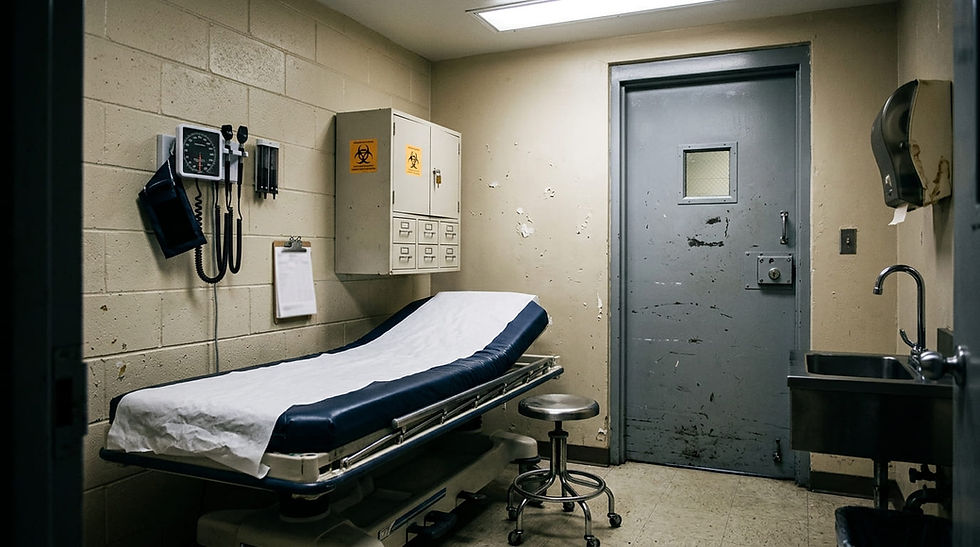
Medical neglect is one of the most serious prison conditions failures because the person needing treatment cannot simply seek care somewhere else.
Outside prison, a patient who feels ignored may contact another provider, visit an emergency room, ask a family member for help, or file a complaint with an outside agency. Inside a correctional facility, access to all of those options is controlled.
An incarcerated person may need staff permission to leave a housing unit. They may need an officer to deliver a medical request. They may depend on prison staff to schedule an appointment, provide medication, arrange transportation, or decide whether a symptom is urgent.
That makes the complaint process a matter of health and sometimes survival.
I have read prison abuse investigations where medical requests were delayed, symptoms were dismissed, and serious conditions became worse because no one acted quickly enough. The record often contains warning signs: repeated requests, worsening symptoms, missed follow-ups, or medical notes that should have triggered a stronger response.
The failure rarely belongs to one person alone.
It may begin with the officer who ignores the request. It may continue with an understaffed clinic. It may deepen when supervisors fail to review delays. It may become nearly impossible to correct when the grievance process treats the complaint as a routine administrative matter.
When prison oversight does not reach medical care, people can suffer permanent harm while the institution produces paperwork showing that procedures technically existed.
Excessive force and staff misconduct
Excessive force cases are where prison oversight failures become easiest to see.
In June 2024, the New Jersey Office of the State Comptroller released a report examining how the Department of Corrections’ Special Investigations Division handled allegations of assault, excessive force, and sexual abuse at three state prisons.
Investigators reviewed 46 case files from 2018 through 2022 and found that eyewitnesses were not interviewed in 22 percent of the cases, while key evidence was missing from nearly 13 percent of the files. Of 38 cases involving correctional officers, only two resulted in an officer receiving discipline. I have reviewed enough audits to know that numbers like these do not describe a few paperwork mistakes — they describe an investigative system that repeatedly failed to perform basic fact-finding.
The cases I keep coming back to are the two incidents at Bayside State Prison.
In one 2019 incident, surveillance footage showed an officer striking an incarcerated person in the face multiple times and taking him to the ground without any visible physical provocation. In a separate 2018 incident, footage showed another officer using pepper spray and taking an incarcerated person to the ground, again without visible aggression matching the justification later offered. The internal investigators did not interview important eyewitnesses in either case, and no officer was disciplined. What troubles me most is not only what the video appeared to show; it is that the investigation failed to pursue the witnesses who might have confirmed or challenged the officers’ accounts.
That is what a prison misconduct investigation failure looks like in practice.
The investigation exists.
The file exists.
The footage exists.
But the truth-finding never reaches the level the allegation demands.
Retaliation and fear inside the facility
Fear is one of the strongest forces shaping prison conditions.
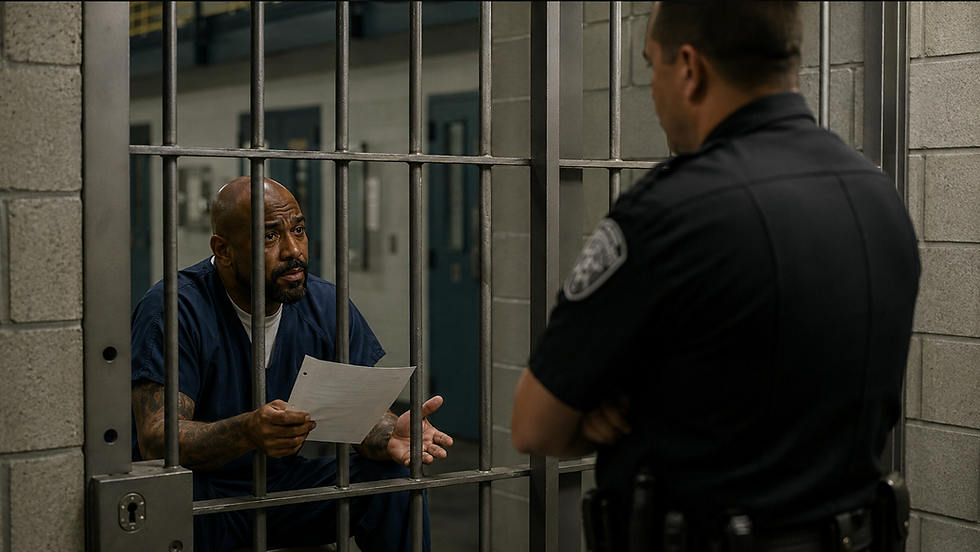
An incarcerated person who reports abuse does not leave the facility after filing the complaint. They remain inside the same system, often near the same staff members they accused. Those staff members may still control movement, housing, meals, mail, recreation, medical access, disciplinary reports, and communication with family.
That imbalance changes the calculation.
The question is not simply, “Should I report this?”
The real question is, “What will happen to me after I report it?”
Retaliation may involve direct threats or physical abuse. It can also be quieter: a housing reassignment, a disciplinary charge, lost privileges, delayed mail, repeated searches, or staff members making daily life harder in ways that are difficult to document.
Officers who report prison staff misconduct face pressure of their own. Corrections work depends heavily on coworkers responding during emergencies. An officer labeled disloyal may worry about assignments, isolation from colleagues, or whether backup will arrive as quickly when it is needed.
That fear helps explain why formal reporting numbers never capture the full amount of misconduct inside correctional facilities.
A 2026 investigation by The Marshall Project and NPR examined nearly one million federal grievance cases dating back to 2000 and found that less than 2 percent of federal prison grievances decided in 2023 were granted. Almost half were rejected for procedural reasons, while another large share was administratively closed rather than decided on the substance of the complaint. The reporting also found that the grievance approval rate had fallen from just under 7 percent in 2000 to below 2 percent in 2023.
When I look at those numbers, I do not see an inmate grievance system resolving problems — I see a system in which reaching the merits of a complaint has become the exception.
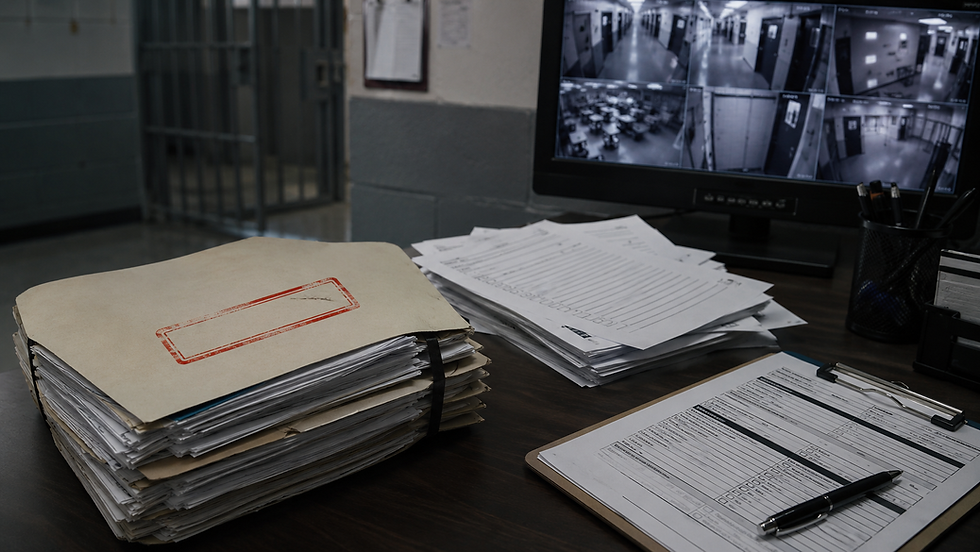
Why Internal Investigations Fail in Prisons
The prison investigates itself
The most basic problem with prison internal investigations is structural.
The institution accused of misconduct often controls the investigation into that misconduct.
Prison staff may collect the evidence. Prison investigators may question the witnesses.
Prison supervisors may review the findings. Prison administrators may decide whether discipline is appropriate.
Everyone involved may be acting professionally. But the conflict does not disappear simply because the people inside the system believe they can remain objective.
Investigators may work beside the officers they are examining. They may report to supervisors concerned about staffing shortages, legal exposure, public criticism, or institutional reputation. They may know that substantiating an allegation will create disciplinary proceedings, union disputes, lawsuits, or criminal referrals.
I have read enough prison internal investigations to know how easily those pressures can shape an inquiry without anyone openly ordering a prison abuse cover up.
The investigator asks fewer questions.
The witness interview stays brief.
The officer’s explanation receives the benefit of every doubt.
The inmate’s version is treated as unreliable before the evidence is reviewed.
The case closes as unsubstantiated.
No one has to write, “Protect the institution.” The structure can push the investigation in that direction on its own.
Reports can protect the institution
Official reports carry enormous power inside prisons.
A use-of-force report may determine whether an officer is disciplined or cleared. An incident report may decide whether an inmate loses privileges, receives additional restrictions, or faces criminal charges. An internal investigation finding can influence lawsuits, public records requests, oversight reviews, and future employment decisions.
That power makes language critical.
There is a major difference between writing that evidence disproved an allegation and writing that investigators could not substantiate it. There is a difference between finding force justified and failing to make any finding at all. There is a difference between documenting missing evidence and simply closing the file without discussing it.
I have seen reports where the conclusion sounds certain even though the investigation was thin. I have seen findings built almost entirely around the officer’s written account. I have seen allegations described as unsupported after witnesses were never interviewed or video was not preserved.
A report like that does more than fail to discover the truth.
It creates a new official version of the event.
Once that version enters the record, every later reviewer starts from it. The institution can point to the completed investigation. Attorneys must spend time challenging its assumptions. Families may never see the underlying evidence.
That is how documentation becomes part of a prison corruption cover up without necessarily containing an obvious lie.
Officers may stay silent
The code of silence inside correctional facilities is not a movie cliché.
It is a professional survival problem.
Officers work in environments where a routine shift can become dangerous with almost no warning. They depend on each other for information, physical backup, and immediate response. That dependence creates strong bonds, and those bonds can make reporting a colleague feel like a threat to the group.
I have read accounts from officers who knew something was wrong but also understood what speaking up could cost them. They could be treated as untrustworthy, removed from informal staff networks, assigned undesirable posts, or viewed as someone who would not protect coworkers.
That does not excuse silence.
But it does explain why policies requiring staff to report misconduct are not enough.
If the institution does not protect officers who cooperate with correctional officer misconduct investigations, the policy competes against fear, loyalty, and the daily reality of depending on colleagues for safety.
The New Jersey comptroller identified the code of silence as one factor behind failures in the Special Investigations Division. That finding did not surprise me. The more closed and dangerous the workplace, the harder it becomes for employees to challenge the people beside them.
Inmates may fear retaliation
Inmates face an even greater risk when they report misconduct.
They do not control where they live, who supervises them, when they move, or how quickly they receive basic services. They may need to request the grievance form from staff. They may have to hand the completed complaint back to an officer. In some facilities, the employee accused of misconduct may learn about the complaint before the person who filed it receives any protection.
That is a serious weakness in the prison complaint process.
A reporting system cannot be considered safe simply because it exists on paper. It has to be accessible, confidential where possible, and protected from interference by the people accused.
I have seen prison grievance system procedures that require incarcerated people to meet strict deadlines, identify the correct level of review, use the right form, submit the correct number of pages, and appeal through several administrative stages.
At the same time, prison staff may miss their own response deadlines without the complaint being granted automatically or forwarded to independent review.
That is not equal accountability.
It is a process in which the person with the least power carries the greatest procedural burden.
Evidence can be delayed, lost, or ignored
A prison misconduct investigation is only as reliable as the evidence it collects and preserves.
Video footage may be overwritten. Medical records may not be requested. Witnesses may be transferred. Memories become less precise. Physical evidence disappears.
Recorded interviews cannot be located.
Every delay benefits uncertainty.
In the New Jersey review, key evidence was missing from six of the 46 files examined. Missing materials included recorded interviews and surveillance footage — exactly the kinds of evidence needed to test competing versions of an incident.
I have never accepted “missing evidence” as a neutral administrative problem.
When an institution knows that surveillance footage may be relevant to an excessive-force allegation, preserving that footage should be automatic. When a person reports an injury, investigators should obtain medical records promptly. When eyewitnesses are identified, interviews should happen before transfers, scheduling issues, and institutional pressure make cooperation harder.
A prison abuse investigation that waits too long may still generate a report.
What it cannot generate is the evidence it allowed to disappear.
How Prison Oversight Failures Allow Problems to Continue
Weak investigations
A weak investigation can look complete from a distance.
There is a case number. There are forms. Someone interviewed the accused officer. A supervisor signed the final page. The file was closed.
But completion is not the same as investigation.
A real inquiry follows the evidence even when it creates problems for the institution. It interviews the person who complained. It questions every relevant witness. It compares written reports with video, medical documentation, physical evidence, and timelines. It challenges statements that do not fit the record.
Weak investigations stop before that point.
They accept vague answers. They fail to explain contradictions. They classify allegations as unsubstantiated because the missing evidence was never collected. They treat uncertainty created by the investigation’s own failures as a reason to clear the accused.
That outcome sends a message through the facility.
Officers learn that the formal review may not look closely.
Inmates learn that reporting abuse may accomplish nothing.
Supervisors learn that closing the file matters more than resolving the facts.
Missing accountability
Accountability requires more than identifying a policy violation.
Someone has to act.
I keep coming back to a series of DOJ Office of the Inspector General findings about the Federal Bureau of Prisons between 2022 and 2025. In 2022, the OIG warned that the BOP’s treatment of inmate statements in employee misconduct investigations could allow staff members who committed misconduct to avoid accountability and remain on the job. In 2023, the OIG reported that, as of September 2022, 7,893 employee misconduct cases remained open and discipline had not yet been imposed in another 2,279 cases where investigators had already sustained misconduct allegations. In 2025, the OIG reported weak oversight and documentation surrounding prolonged restraints, including one case in which an incarcerated person suffered an injury that required the amputation of part of a limb after being restrained for more than two days.
Those findings were issued in different years and involved different parts of the system.
The pattern remained the same.
Warnings were present. Policies were present. Investigative authority was present.
Accountability arrived late, incompletely, or only after severe harm had occurred.
A backlog is not just a management statistic. Every delayed case may involve an employee still working, witnesses waiting, evidence aging, and a facility receiving no clear message that misconduct has consequences.
Poor documentation
Prison accountability depends on documentation.
That makes poor documentation one of the most damaging prison oversight failures.
Incident reports should record what happened. Use-of-force reports should explain why force was necessary, what level of force was used, how long it continued, and what injuries followed. Medical records should document treatment. Grievance files should show how complaints were evaluated and resolved.
When those records are accurate, outside reviewers have something solid to examine.
When they are vague, incomplete, or false, oversight begins with a contaminated record.
I have reviewed cases where the written report used language such as “became aggressive” or “failed to comply” without describing the specific behavior. Those phrases can sound official while hiding the facts needed to evaluate whether force was justified.
What did the person do?
Where were their hands?
Were they restrained?
What warning was given?
What does the video show?
A report that avoids those questions may protect the officer who wrote it, but it does not protect the integrity of the institution.
Lack of independent review
Independent review matters because prison systems are not good at judging their own failures.
In 2024, FCI Dublin in California became one of the clearest examples I have followed of what happens when ordinary federal prison oversight has already broken down. A federal judge appointed a special master to supervise the women’s prison — the first time a Bureau of Prisons facility had been placed under that level of court oversight — after years of staff sexual abuse allegations, retaliation claims, criminal prosecutions, and failed reform efforts. The BOP closed the facility in April 2024, while the court continued monitoring the transfers and treatment of more than 600 incarcerated women. By that point, the former warden and several other employees had already been convicted or pleaded guilty in criminal cases connected to sexual abuse at the prison.
That case matters because federal prison oversight did not correct the problem through ordinary channels.
Outside journalists investigated.
Women inside the prison reported abuse.
Federal prosecutors brought charges.
Civil-rights attorneys filed suit.
A judge finally imposed direct outside supervision.
When a court has to take that level of control, the failure is bigger than individual prison staff misconduct. It shows that internal reporting, management review, and ordinary correctional oversight did not protect the people in custody.
Independent review should not arrive only after years of allegations and criminal convictions.
It should be built into the system before abuse becomes institutional culture.
The Link Between Prison Conditions and Accountability
When complaints are ignored
Prison conditions decline when complaints stop producing action.
A leaking pipe remains unfixed. A medical problem worsens. An abusive staff member becomes more confident. A housing unit stays understaffed. A broken camera leaves the next incident undocumented.
One ignored complaint may look small.
Hundreds of ignored complaints create institutional failure.
The most damaging effect is the loss of trust. When inmates believe the grievance process will reject or close their complaint without addressing it, they stop participating.
When honest officers believe internal reporting will expose them to retaliation, they stay silent. When families receive vague answers, they lose confidence that anyone inside is listening.
That silence does not mean the problem disappeared.
It means the institution has lost one of the few warning systems available to it.
When misconduct becomes routine
Misconduct becomes routine when nothing interrupts it.
An officer uses unnecessary force and receives no discipline. Another officer sees what happened. A supervisor approves the report. The next incident becomes easier.
The same pattern applies to medical neglect, retaliation, contraband, falsified documentation, and staff harassment.
The first failure may be treated as an exception.
The fifth becomes a habit.
The twentieth becomes culture.
I have found that prison accountability often fails gradually. There is rarely a meeting where administrators decide to permit abuse. Instead, standards erode through small choices: not reviewing the footage, not interviewing the witness, not challenging the report, not protecting the complainant.
Eventually, the facility’s unwritten rules become stronger than its official policies.
That is when a prison abuse cover up no longer requires coordination. Everyone already knows what will be reported, what will be ignored, and what speaking honestly might cost.
When the public never sees the full story
The public has limited access to correctional facilities.
Journalists cannot freely walk housing units. Families hear only what their loved ones can communicate during monitored calls, brief visits, or delayed letters. Oversight agencies may cover dozens of facilities with limited staff.
The records that could explain what happened are often difficult to obtain.
Internal investigation files may be confidential. Video may be withheld because of security concerns. Grievance data may not be published in a form the public can easily evaluate. Personnel discipline may be protected by state law or union agreements.
That creates an information gap.
Inside the gap, prison conditions can deteriorate for years while the public receives reassuring statements about policies, training, and ongoing reviews.
I have learned not to judge a correctional institution only by what administrators say after a scandal.
I look at what the records show before the scandal.
How many complaints were filed?
How many were substantiated?
How long did investigations remain open?
Were witnesses interviewed?
Was video preserved?
Did anyone face consequences?
Those answers tell the real story.
What Strong Prison Oversight Should Look Like
Independent review
Strong prison oversight starts with independence.
Investigators should not answer to the same chain of command they are reviewing. They need authority to enter facilities, inspect records, interview staff and inmates privately, preserve evidence, issue public findings, and require corrective action.
Independence also means funding.
An oversight office with three investigators responsible for dozens of prisons may be independent on paper but powerless in practice. Cases will be delayed. Site inspections will be infrequent. Follow-up work will compete with new emergencies.
Real oversight needs enough trained staff to investigate quickly and thoroughly.
It also needs the authority to return.
A facility may temporarily improve after a critical report. Without follow-up inspections and public progress updates, the same practices can return once attention moves elsewhere.
Protected witnesses
No prison misconduct investigation can succeed if witnesses expect punishment for telling the truth.
Inmates need confidential reporting channels that do not require them to hand an abuse complaint directly to the staff member they fear. They need protection from retaliatory discipline, housing changes, isolation, harassment, and loss of access to programs.
Officers need protection too.
An employee who reports misconduct should not lose desirable assignments, promotional opportunities, colleague support, or physical safety. The system must make clear that reporting abuse is professional conduct, not betrayal.
Protection cannot depend on promises alone.
Investigators should track what happens to witnesses after they cooperate. Sudden disciplinary actions, transfers, negative evaluations, or housing changes should trigger review.
A witness-protection policy that ends when the interview is over is not protection.
Preserved video and records
Evidence preservation should begin the moment a serious complaint is filed.
Relevant video should be secured automatically. Medical records should be copied. Staff schedules, housing logs, radio communications, restraint records, incident reports, photographs, and witness names should be identified before they disappear.
The institution should not have sole control over that evidence.
Independent investigators need prompt access, and every transfer or alteration should be recorded through a clear chain of custody.
Body cameras and fixed surveillance systems can help, but cameras alone do not create accountability. Footage must cover the right areas, remain available long enough for complaints to be filed, and be preserved when an incident occurs.
A camera that records an assault and automatically deletes the footage before investigators request it is not oversight.
It is decoration.
Clear findings
A strong investigation reaches a clear conclusion.
Was the allegation substantiated?
What evidence supports that finding?
What evidence contradicts it?
Were any investigative steps impossible, and why?
A vague report protects the institution from making a decision. A clear report forces the institution to respond.
Investigators should separate three very different outcomes:
Evidence showed the allegation occurred.
Evidence showed the allegation did not occur.
The investigation could not determine what happened.
Those findings should never be treated as interchangeable.
When an investigation cannot reach a conclusion because evidence was lost, witnesses were not interviewed, or records were incomplete, the report should say that plainly.
Institutional failure should not be converted into exoneration for the subject of the investigation.
Real consequences
Oversight without consequences is paperwork.
If an officer commits excessive force, falsifies a report, retaliates against a complainant, or participates in a prison corruption cover up, there must be a response proportional to the conduct.
That may mean retraining for a minor policy failure. It may mean suspension, termination, loss of certification, civil liability, or criminal prosecution for serious misconduct.
Supervisors must also face accountability.
A system that punishes the lowest-ranking officer while ignoring the supervisor who approved false reports or discouraged witnesses will not change its culture.
Consequences should extend beyond individuals. Facilities with repeated failures may need court monitoring, leadership changes, mandatory reporting, outside management review, or limits on admissions until unsafe prison conditions are corrected.
Accountability is not revenge.
It is how an institution tells everyone inside that the written standards are real.
A Corrections Officer's Perspective on Prison Conditions
Most analysis of prison conditions comes from outside the walls.
Researchers study data. Journalists examine individual cases. Lawyers challenge unconstitutional practices. Inspectors audit policies and facilities.
All of that work matters.
But it does not replace the perspective of someone who has worked a prison unit, managed daily tension, watched staff culture develop, and seen how policy changes when it reaches the floor.
Officers know how much depends on leadership.
A strong supervisor can set clear expectations, challenge weak reports, protect officers who speak honestly, and make it known that unnecessary force or retaliation will not be tolerated.
A weak supervisor sends a different message.
Reports are accepted without questions. Complaints become inconveniences. Staff members learn which rules matter and which can be ignored. Officers who challenge the culture are treated as the problem.
That insider perspective also reveals the pressure honest officers carry.
They may work short-staffed units, manage volatile populations, respond to medical emergencies, and make fast decisions with limited information. They depend on colleagues for safety. They may know that reporting a coworker will create personal and professional consequences.
None of that excuses misconduct.
It explains why accountability has to be designed for the real prison environment, not an ideal version described in policy manuals.
I have read hundreds of pages of oversight findings that identify what went wrong after the fact. A firsthand account can show how the warning signs looked before the incident reached an investigator.
If you want to understand that gap between prison policy and prison reality, Corrections Corrupt: A True Corrections Officer Story is where I would start. Craig P. Wallin writes from nearly two decades of direct experience inside an adult male correctional institution, and his perspective helps explain how pressure, loyalty, silence, and institutional habits shape what happens behind the walls.
Craig P. Wallin writes from nearly two decades of direct experience inside an adult male correctional institution.
Why Accountability Matters Inside Prisons
Prison conditions and prison oversight failures are not separate problems.
They feed each other.
Conditions deteriorate when oversight fails. Oversight fails when evidence is weak, witnesses are afraid, and investigators lack independence. Accountability disappears when the institution controls every stage of the process and treats criticism as a threat.
That cycle harms incarcerated people first, but it does not stop there.
It harms honest officers who must work beside staff members they do not trust. It creates more dangerous housing units. It damages morale. It makes every future complaint harder to believe because the institution’s records no longer carry credibility.
Families suffer too.
They cannot see what is happening inside. They depend on short calls, letters, attorneys, and official explanations. When oversight fails, they have no reliable way to know whether their loved one is receiving medical care, living in safe conditions, or facing retaliation after reporting abuse.
The public also has a stake.
Prisons operate through public authority and public funding. The government may lawfully remove a person’s freedom, but it also assumes responsibility for that person’s safety, medical care, and basic treatment.
Closed walls do not erase that responsibility.
Breaking the cycle requires more than writing another policy. It requires independent investigators, protected reporting, preserved evidence, public findings, meaningful discipline, and follow-up strong enough to confirm that promised reforms actually occurred.
It also requires people inside the system who are willing to speak honestly.
I have covered enough prison investigation failures to know that change usually begins with someone refusing to accept the official version when the evidence points somewhere else.
That person may be an inmate.
It may be an officer.
It may be a nurse, investigator, attorney, family member, auditor, or journalist.
But someone has to keep asking the question the institution would rather close:
What really happened here?
Read a Firsthand Corrections Officer Story
I recommend prison books carefully.
Some accounts turn correctional work into entertainment. Some reduce every officer to a villain. Others defend the institution so completely that misconduct becomes a series of isolated misunderstandings.
Neither version helps readers understand how prisons actually function.
Craig P. Wallin’s Corrections Corrupt: A True Corrections Officer Story matters because it comes from someone who spent nearly 20 years working inside an adult male correctional institution.
He writes from inside the job.
The shifts. The pressure. The staff culture. The responsibility. The daily compromises. The things that go wrong. The silence that can allow those things to continue.
After years of reviewing audits and misconduct investigations, I have learned that official records can tell us only part of the truth. They tell us what investigators documented, what courts proved, and what agencies were finally willing to acknowledge.
They do not always capture what it feels like to work inside a closed institution where written rules, informal expectations, personal loyalty, and survival can collide on the same shift.
That is why I believe this book deserves to be read now.
Not after the next prison scandal.
Not after another inspector general report confirms that the same failures happened again.
Read it now, while the country is still asking why prison oversight keeps failing and why so many warning signs remain buried until someone is badly hurt.
Experience nearly 20 years of corrections work — told honestly, without filter.
Frequently Asked Questions
What are prison conditions?
Prison conditions refer to the living, safety, medical, disciplinary, and institutional environment inside a correctional facility, including housing, staff conduct, sanitation, violence, medical care, and access to basic rights.
How do oversight failures affect prison conditions?
Oversight failures can allow unsafe prison conditions, abuse, neglect, false reports, retaliation, and staff misconduct to continue without proper investigation or correction.
Why do internal prison investigations fail?
Internal prison investigations can fail when the same institution controls the evidence, witnesses, reports, video footage, and final findings.
Why is prison oversight important?
Prison oversight is important because correctional facilities operate behind closed walls, where abuse, neglect, and misconduct can remain hidden without strong accountability.
Can poor prison conditions be linked to misconduct?
Yes. Poor prison conditions can be linked to staff misconduct, weak leadership, ignored complaints, false reporting, and lack of independent oversight.
About The Author

Craig P. Wallin is a former corrections officer with nearly two decades of experience inside an adult male correctional institution. His memoir, Corrections Corrupt: A True Corrections Officer Story, gives readers a firsthand look at prison life, institutional pressure, misconduct, and the realities that often stay hidden behind the walls.

Comments