Inmate Rights and Prison Retaliation: How Staff Silence Whistleblowers and Inmates

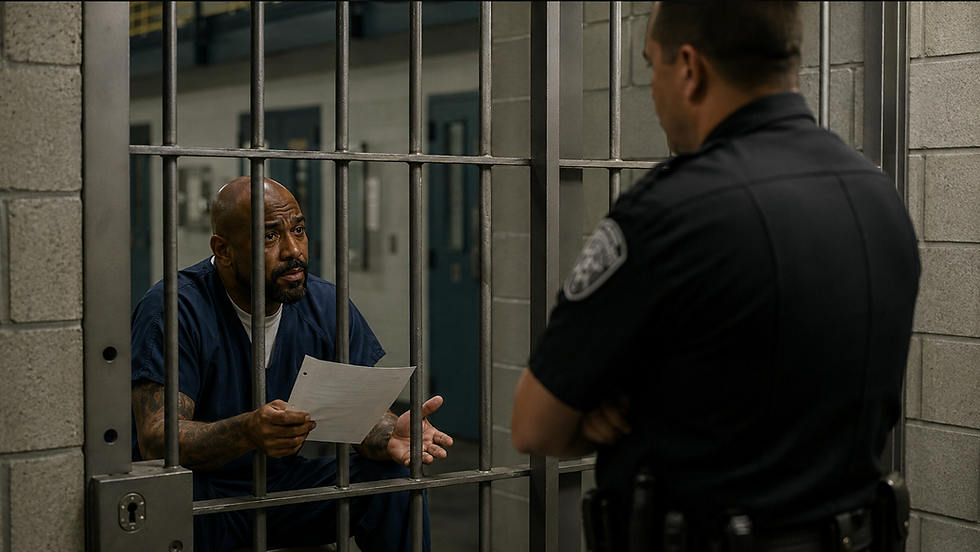
Inmate rights exist inside every correctional facility in America.
The harder question is what happens when somebody actually tries to use them.
The Constitution does not disappear at the prison gate. The Eighth Amendment restricts cruel and unusual punishment. Incarcerated people retain protections against deliberate indifference to serious medical needs and known risks of serious harm.
They also retain important First Amendment protections, including access to courts and the ability to petition or complain about prison conditions, although those rights can be subject to legitimate security restrictions.
Federal and state laws prohibit sexual abuse in custody, and the Prison Rape Elimination Act created national standards aimed at prevention, reporting, investigation, and protection from retaliation.
I have spent enough time reviewing DOJ findings, federal court records, inspector general reports, and documented prison retaliation cases to know that the difficult part is rarely finding a policy that says the right exists.
The difficult part is enforcing that right from inside the institution.
That is where the gap opens.
An incarcerated person reports abuse but still sleeps in a housing unit controlled by correctional staff. They still depend on that institution for food, medication, mail, medical appointments, phone access, movement, recreation, and protection from other prisoners.
A staff member reports misconduct and still has to walk back into the facility the next morning. The coworker they reported may still be on the same shift. The supervisor who received the complaint may still control assignments, overtime, evaluations, and discipline.
That dependence gives retaliation its power.
Prison retaliation does not always arrive as an explicit threat.
Sometimes it is a disciplinary report.
Sometimes it is a cell search that suddenly becomes unusually frequent.
Sometimes it is a housing transfer.
Sometimes privileges disappear.
Sometimes a person who had few disciplinary problems before filing a complaint suddenly seems to violate rules every week.
And sometimes nothing obvious happens at all. The person simply watches what happened to the last inmate or employee who spoke up and decides silence is safer.
That is what I keep coming back to when I look at inmate rights in prison: a right can remain perfectly intact on paper while becoming dangerously expensive to exercise in practice.
Before I get into the cases, I want to mention a firsthand account that changed how I think about that gap between prison policy and prison culture. Craig P. Wallin’s Corrections Corrupt: A True Corrections Officer Story comes from nearly two decades inside an adult male correctional institution, and that inside perspective helps explain why loyalty, fear, informal rules, and institutional pressure can sometimes carry more weight than what the handbook says.
A firsthand account from nearly 20 years inside corrections — told without filter.
Quick Answer: How Does Prison Retaliation Affect Inmate Rights?
Prison retaliation undermines inmate rights by making people afraid to exercise them.
An incarcerated person may have the right to report staff abuse, file grievances, seek medical care, contact attorneys, challenge unconstitutional conditions, or cooperate with an investigation.
But those rights become much less meaningful if using them leads to punishment.
That punishment does not have to be dramatic.
A grievance can be followed by a disciplinary charge.
A complaint can be followed by segregation.
A person who reports sexual misconduct can lose access to visits, calls, property, or programming.
A transfer can move someone hundreds of miles from family support.
A staff whistleblower can suddenly discover that their performance, schedule, attitude, or workplace conduct has become a problem.
None of those actions automatically proves retaliation. Correctional institutions need legitimate disciplinary systems, housing classifications, transfers, searches, and security restrictions.
What matters is motive, timing, pattern, and evidence.
That is why prison retaliation cases are so difficult.
The institution usually holds the records needed to prove what changed after the complaint.
The institution knows when the grievance was filed.
The institution controls disciplinary files.
The institution stores surveillance footage.
The institution records housing moves.
The institution knows which supervisors authorized changes.
And the person alleging retaliation may have no independent access to any of it.
When exercising a right carries a serious personal cost, people stop exercising it.
That is the damage retaliation does to inmate rights.
What Inmate Rights Are at Risk Inside Prisons?
In my years following inmate rights cases, I have learned that public discussion often falls into one of two bad extremes.
One side talks as if incarceration eliminates constitutional protections.
The other sometimes talks as if prisoners retain exactly the same freedom they had outside.
Neither is accurate.
Incarcerated people lose significant liberty as a lawful consequence of incarceration.
Correctional administrators also receive considerable authority to impose rules necessary for security and order.
But incarceration is not a constitutional blank check.
The Eighth Amendment protects sentenced prisoners against cruel and unusual punishment. That includes protection from deliberate indifference to serious medical needs and, under established constitutional standards, from known substantial risks of serious harm.
Excessive force can also violate constitutional protections when force is used maliciously and sadistically rather than for a legitimate correctional purpose.
Sexual abuse by staff is not part of a lawful sentence.
Neither is knowingly leaving someone exposed to serious violence.
First Amendment protections matter too.
Incarcerated people retain rights related to petitioning government and accessing courts. Filing a legitimate grievance about prison treatment cannot lawfully become an excuse for punishment simply because staff dislike the complaint.
Those protections are the mechanisms that allow people to challenge unsafe prison conditions, seek treatment, report abuse, expose correctional officer misconduct, and bring serious violations to outside attention.
That is why retaliation strikes deeper than one disciplinary action.
It attacks the mechanism used to enforce the underlying right.
If people become afraid to report excessive force, excessive force becomes harder to detect.
If people fear reporting sexual abuse, offenders gain protection through silence.
If people stop requesting medical care because they expect punishment or humiliation, treatable conditions can become emergencies.
If witnesses refuse to cooperate because they watched another witness suffer, internal investigations lose the evidence they need.
A prison can have strong constitutional policies on paper and still produce serious violations if nobody inside feels safe enough to invoke them.
What Prison Retaliation Looks Like
Prison retaliation is effective partly because so much of it can resemble ordinary correctional administration.
That makes context essential.
False disciplinary reports are one of the clearest examples.
A prison needs rules and legitimate discipline. But a staff member who wants to punish an incarcerated person often has access to a powerful tool: the incident report.
Terms such as insolence, refusing an order, disruptive behavior, or threatening conduct can carry real consequences.
A disciplinary conviction can affect housing.
Programming.
Privileges.
Good-time credits in some systems.
Classification.
Credibility during later complaints.
That is why I pay attention when disciplinary problems suddenly begin after an inmate grievance.
Housing changes and transfers can carry the same power.
To an outsider, a transfer may look like an entry in a database.
To the incarcerated person, it can mean losing a job, treatment program, educational course, trusted medical provider, legal materials, or proximity to family.
A move into more restrictive housing changes daily life immediately.
Again, prisons have legitimate reasons to move people.
The question in a retaliation case is why this person was moved at this time.
Loss of privileges can be quieter still.
Phone access.
Visits.
Recreation.
Commissary.
Work.
Programming.
Property.
These are not luxuries in the ordinary sense inside a prison. They are the limited pieces of ordinary life available to someone whose movement is already controlled.
Removing them selectively can send a message without anyone ever saying the word retaliation.
Threats and intimidation are easier to recognize.
Recent investigative reporting on the federal grievance system has documented allegations from incarcerated people who said officers threatened them because they continued filing complaints or interfered with access to grievance forms.
Blocking the form may be as effective as defeating the grievance.
A complaint that never enters the system leaves no administrative trail.
Being labeled a snitch creates another danger.
For an incarcerated person, that label can create a real physical safety risk.
For a correctional employee, being treated as disloyal can damage working relationships in an environment where coworker support matters during emergencies.
That is why retaliation in prisons is not limited to inmates.
The same culture that can silence an incarcerated witness can also silence the officer, nurse, counselor, psychologist, or investigator who sees something wrong.
Prison Retaliation Cases and Common Patterns
The cases that stay with me are not always the ones involving a single shocking incident.
They are the ones showing what happens when a reporting system, investigative system, or entire institution fails to protect rights after warning signs become obvious.
Georgia Prisons — DOJ Investigation 2024
In October 2024, the Justice Department published findings from its investigation of Georgia’s prison system and concluded that the state was violating the Eighth Amendment by failing to protect incarcerated people from widespread violence and sexual harm.
The federal findings described a system with severe staffing shortages, widespread violence, inadequate supervision, poor incident investigations, dangerous infrastructure, uncontrolled contraband, and inadequate protection for particularly vulnerable incarcerated people.
What struck me while reviewing that record was not simply the violence.
It was how long the warning signs had existed.
DOJ said Georgia had known about unsafe conditions for years and had failed to take reasonable measures sufficient to correct them. Federal investigators also faced serious resistance obtaining records and access during the investigation; the department ultimately used subpoenas and court enforcement to obtain material it had requested.
That matters because inmate rights depend on more than rules inside the facility.
They also depend on outside authorities being able to see what is happening.
When oversight agencies cannot obtain records promptly, accountability slows down.
And the people living inside the institution remain exposed while government agencies fight over access.
California Women's Prisons — DOJ Findings 2026
The Justice Department opened a civil-rights investigation in September 2024 involving the Central California Women’s Facility in Chowchilla and the California Institution for Women in Chino.
In August 2026, DOJ announced that it had reasonable cause to believe California officials were violating the Constitution by failing to protect incarcerated women from sexual abuse and harassment by staff.
The findings described longstanding staff sexual misconduct, inadequate safeguards, failures in confidential reporting, improper investigative practices, and insufficient accountability.
I keep coming back to the reporting problem.
If an incarcerated woman has been sexually abused by an employee, the reporting channel has to be trustworthy.
It cannot merely exist.
The person reporting has to believe the complaint will remain appropriately confidential, that accused employees cannot interfere with the process, that investigators will follow the evidence, and that retaliation will be taken seriously.
Recent reporting on the DOJ findings described incarcerated women who said disciplinary violations, cell searches, property seizures, and restrictions followed complaints.
Those allegations explain why inmate rights and retaliation cannot be separated.
The right to report sexual abuse is weakened dramatically if reporting creates a new source of fear.
A policy saying “zero tolerance” means very little if the person who needs the policy does not trust the reporting mechanism.
FCI Dublin California — Retaliation After Reporting Abuse
FCI Dublin in California became one of the most troubling federal prison scandals I have followed.
The women’s facility eventually closed in 2024 after years of sexual-abuse allegations, criminal cases against staff, litigation, and increasing outside scrutiny.
Aron Laureano, who spent two years at Dublin, later described a culture in which people who tried to complain about abuse could face punishment.
According to a federal lawsuit and investigative reporting, Laureano alleged that officers retaliated against her by putting her in solitary confinement, taking away visits and phone access, and confiscating property.
She also described an officer coming to her cell and referring openly to details from her written grievance.
That detail tells you how quickly trust in a complaint system can collapse.
A person writes something believing they are reporting misconduct through an official process.
Then somebody inside the institution appears to know exactly what was written.
What incentive is there to write the next complaint?
The psychological effects of solitary confinement make allegations involving retaliatory isolation particularly serious. Solitary is already one of the most restrictive tools available inside a prison. If it is used for legitimate safety purposes, those reasons should withstand scrutiny. If isolation instead follows protected reporting because somebody wants to punish the complainant, it becomes a fundamentally different issue.
The Dublin scandal is also a reminder that outside intervention often arrives late.
By the time a prison becomes nationally known for systemic abuse, many people inside have already spent years trying to tell someone what was happening.
Stillwater Prison Minnesota — Retaliation for Protesting Water Conditions 2023
In September 2023, more than 100 incarcerated men at Minnesota Correctional Facility-Stillwater refused to return to their cells during a protest involving extreme heat, staffing-related restrictions, and concerns about discolored drinking water.
The protest itself was widely reported and ended without injuries.
In the days afterward, incarcerated people and advocates alleged retaliation, including continued restrictive housing and disciplinary charges against participants.
I think precision matters with this case.
Later state testing found the drinking water met applicable safety standards, although officials acknowledged discoloration and ordered additional testing and water-management work.
So I would not describe unsafe drinking water as a proven constitutional fact.
The retaliation question is separate.
People were protesting conditions they believed were unsafe. Afterward, participants and advocates reported increased restrictions and disciplinary consequences.
That is exactly the kind of sequence an independent review should examine carefully:
what discipline was imposed, why it was imposed, whether comparable conduct usually received comparable punishment, and whether the response was motivated by legitimate security concerns or the act of protesting itself.
An Additional Inmate Rights Case — Fulton County Jail, Georgia, 2024
One additional case I keep coming back to is the Justice Department’s November 2024 findings at the Fulton County Jail in Georgia. DOJ concluded that the jail routinely violated constitutional and federal rights by exposing people to serious violence, unsafe and unsanitary living conditions, inadequate medical and mental-health care, and unconstitutional uses of solitary confinement. The department reported that six people had died from violence at the jail from 2022 through the time of its findings, and that more than 300 stabbings occurred in 2023 alone. To me, the case is a stark reminder that inmate rights violations do not require one retaliatory officer — institutional conditions themselves can become unconstitutional when known risks remain uncorrected.
How the Inmate Grievance Process Can Fail

The inmate grievance process is supposed to turn conflict into documentation.
That is a sensible goal.
Instead of responding to an officer confrontation with another confrontation, an incarcerated person writes a complaint.
Instead of trying to resolve a medical dispute informally, they create a record.
Instead of relying on rumor, they use a formal review system.
The problem is what happens when the grievance system itself becomes difficult to trust.
An incarcerated person may need to obtain a specific form.
Meet a specific deadline.
Submit it through a designated staff member.
Appeal within another deadline.
Preserve copies.
Identify the right issue at the right stage.
Follow institutional rules that may be difficult to understand without legal assistance.
That is already a high burden.
Then add retaliation.
A 2026 investigation by The Marshall Project and NPR found that fewer than 2 percent of federal prison grievances decided in 2023 were granted. Large numbers were rejected for procedural reasons or administratively closed before the underlying complaint was resolved on its merits.
The approval rate alone cannot tell us whether every rejected grievance deserved relief.
It does tell us how difficult the process can be.
The structural issue concerns me even more.
Incarcerated people may have to begin the process through prison employees — sometimes in the same institution where the alleged misconduct happened.
Federal law makes that process extremely consequential.
Under the Prison Litigation Reform Act, incarcerated plaintiffs generally must properly exhaust available administrative remedies before bringing many prison-condition claims in federal court.
That means a grievance is not just an internal suggestion box.
It may be the first step toward judicial review.
If grievance forms are unavailable, deadlines become impossible to meet, paperwork disappears, or a person is frightened into abandoning the process, the effect can extend beyond the prison.
It can affect whether the court ever hears the underlying claim.
That is why the inmate grievance process has to be more than technically available.
It has to be genuinely usable.
A person who files a grievance should not have to wonder whether tomorrow’s cell search, disciplinary charge, lost job assignment, or housing move happened because they used the process.
A grievance system that creates that fear cannot function as a strong safeguard for inmate rights.
How Staff Silence Whistleblowers and Inmates
I have never believed silence inside correctional facilities is simple.
Sometimes people stay quiet because they are protecting misconduct.
Sometimes they stay quiet because they are afraid.
Sometimes they do not trust the reporting process.
Sometimes they watched somebody else report something and decided the consequences were not worth it.
For incarcerated people, the leverage is obvious.
Correctional staff control most parts of daily life.
Movement.
Meals.
Housing.
Mail.
Medical transportation.
Recreation.
Programs.
Work.
Phone access.
Discipline.
Not every officer abuses that authority, and most routine correctional decisions are not retaliation.
But the power imbalance creates opportunities for retaliation when a staff member chooses to misuse administrative authority.
A person who has just filed a complaint still depends on that system the next morning.
For staff whistleblowers, the pressure works differently.
Correctional officers rely on coworkers for immediate physical backup.
Nurses and mental-health employees rely on custody staff for access and safety.
Supervisors control schedules and assignments.
Colleagues control the everyday social environment.
An employee who becomes known as somebody who reports coworkers may face professional isolation even if no formal disciplinary action is taken.
That is one reason codes of silence survive.
People calculate consequences.
Will anyone believe me?
Will management protect me?
Will my coworkers stop trusting me?
Will the person I report still be working beside me tomorrow?
Will I become the subject of the next investigation?
The same calculation applies to inmates.
Will I be moved?
Will staff label me difficult?
Will another prisoner learn that I complained?
Will my property suddenly be searched every day?
Will I lose phone access?
Will I end up in segregation?
That fear damages institutional records.
When people stop reporting abuse, complaint numbers decline.
Those lower numbers can then be interpreted as evidence that the facility has fewer problems.
When officers refuse to challenge false documentation, the false report becomes official history.
When witnesses remain silent, internal investigators may conclude there is no corroboration.
Then the institution can point to the investigation and say the allegation was never proven.
That is how prison corruption and correctional officer misconduct can survive even in systems that technically have grievance policies, internal affairs units, and oversight procedures.
The paperwork exists.
The question is whether the people who know the truth feel safe enough to put it into the paperwork.
This is also where firsthand officer accounts add something official documents cannot. Policies can describe what staff are supposed to do, but they cannot fully communicate the pressure of working in a closed institution where coworkers depend on each other and informal rules can become stronger than written ones.
Craig P. Wallin writes from nearly two decades of direct experience inside an adult male correctional institution.
Why Retaliation in Prisons Is Hard to Prove
The first problem is simple:
The institution controls the records.
A disciplinary report is created by staff.
A housing change appears in a prison database.
A grievance is processed internally.
Surveillance footage is stored by the institution.
Movement records belong to the prison.
Staff schedules belong to the prison.
Medical appointments are documented through correctional systems.
If an incarcerated person believes they were punished after filing a grievance, proving retaliation often requires reconstructing a timeline from records they do not control.
When was the complaint filed?
When did the accused employee learn about it?
Who authorized the disciplinary action?
How were similar incidents handled before the complaint?
What does the camera footage show?
Were other incarcerated people punished the same way for the same conduct?
Those questions are answerable only if evidence is preserved and investigators have meaningful access to it.
Witnesses may be afraid.
That problem exists on both sides.
An incarcerated witness remains inside the facility after the investigator leaves.
A staff witness continues working beside coworkers after giving a statement.
Even truthful witnesses may hesitate if they believe cooperation will create consequences.
That is why independent investigators need ways to interview people privately and protect them afterward.
The interview is only the beginning.
What happens to the witness two weeks later matters just as much.
Retaliation can look like routine administration.
This is the hardest problem.
A cell search is normal.
A transfer is normal.
A write-up is normal.
A job change is normal.
Segregation can be lawful when there is a legitimate security justification.
Restrictions can be lawful.
The same tools can also be misused.
The difference is context.
Timing.
Intent.
Comparison.
Pattern.
That means a serious retaliation investigation cannot simply ask whether staff had authority to take the action.
Of course they often did.
The investigator has to ask why the authority was used against this person, at this moment, after this complaint.
Internal investigations may protect the institution.
I would never say every internal investigation is corrupt. Many correctional investigators take their responsibilities seriously, and internal review can identify genuine misconduct.
The structural conflict still exists.
The prison may be investigating its own employees.
The supervisors reviewing the case may work in the same chain of command.
The institution may face liability if misconduct is substantiated.
Investigators may know the officers involved personally.
That is why outside review matters most in serious retaliation cases.
An independent investigator does not automatically produce the right answer.
But independence removes one of the strongest reasons to question the process.
How Prison Oversight Failures Allow Retaliation to Continue
Prison oversight failures create room for retaliation because retaliation thrives when nobody outside the institution can reconstruct what happened.
The Georgia prison investigation is a strong example.
DOJ did not simply identify dangerous conditions.
Federal investigators said obtaining records and access from the state became unnecessarily contentious and lengthy. The department used subpoenas and obtained federal court enforcement to secure material needed for the investigation.
Think about what that means from the perspective of an incarcerated person.
If the federal government encounters major difficulty obtaining institutional records, imagine what an individual inmate faces.
That is the scale problem in correctional accountability.
The institution has lawyers.
Databases.
Administrative departments.
Internal investigators.
Records officers.
Supervisors.
The person filing a grievance may have a pencil, a form, and whatever documentation they managed to keep.
Strong oversight is supposed to reduce that imbalance.
Independent investigators need access to video.
Grievance histories.
Medical records.
Housing decisions.
Staff schedules.
Use-of-force reports.
Disciplinary data.
Retaliation allegations should trigger monitoring after the complaint, not merely an interview about what already happened.
If someone alleges sexual abuse, investigators should watch for sudden write-ups or housing changes.
If a staff whistleblower reports misconduct, later disciplinary proceedings should receive careful scrutiny for timing and consistency.
If an incarcerated witness cooperates in an external investigation, officials should
know where that person is housed and what happens to them afterward.
Otherwise oversight becomes reactive.
A person is punished.
The complaint disappears.
Months pass.
Then an outside agency arrives and tries to rebuild the story after records have aged and witnesses have learned to stay quiet.
That is not a reliable way to protect inmate rights.
A Corrections Officer's Perspective on Retaliation and Silence
The distance between policy and practice inside a prison can be difficult to understand from outside.
A written policy is clean.
Report misconduct.
Do not retaliate.
Protect witnesses.
Follow the chain of command.
Preserve evidence.
Real institutions are messier.
People work together for years.
They develop loyalties.
They know which supervisors challenge staff and which ones do not.
They learn which complaints receive attention.
They see what happens to employees who cooperate with outside investigators.
Incarcerated people learn the same lessons.
They know which officers provide grievance forms without argument.
They know which complaints seem to disappear.
They know who was moved after speaking up.
They know who came back from segregation quieter than before.
That information spreads through a facility without appearing in a single official record.
It becomes culture.
And culture can enforce silence more efficiently than a written threat.
That is why I keep returning to firsthand accounts when I write about inmate rights.
A court opinion can tell us whether a constitutional claim survived dismissal.
A DOJ report can describe systemic deficiencies.
An inspector general can document failures.
Those records matter enormously.
But they usually arrive after somebody has already lived through the experience.
They cannot fully reproduce the daily calculation made by the person deciding whether to speak.
Should I report this?
Who will see the complaint?
Will it make anything better?
What will happen to me?
That missing perspective is why Corrections Corrupt: A True Corrections Officer Story belongs in this conversation. It does not represent every facility or every officer, but it gives readers access to the kind of prison culture that outside documents can describe only after something has gone wrong.
Read a Firsthand Corrections Officer Story
I have reviewed enough inmate rights cases to know that official records tell only part of the story.
A DOJ finding can establish that a system failed.
A lawsuit can identify constitutional claims.
A disciplinary record can show what happened after a grievance.
A surveillance video can reveal what really happened in a hallway.
What those documents rarely explain is the atmosphere surrounding the event.
Why did people stay quiet before the investigation?
Why did nobody challenge the report?
Why did the inmate hesitate to file?
Why did a staff member wait before going outside the chain of command?
Why did everybody seem to know something the official record did not?
Those are cultural questions.
And culture is best understood through people who experienced it.
That is why I recommend Corrections Corrupt to readers who want more than a legal summary of prison retaliation.
Craig P. Wallin spent nearly two decades working inside an adult male correctional institution. His account puts the reader closer to the staff culture, daily pressure, institutional habits, and silence that exist behind the policies outsiders usually see.
If you are trying to understand why inmate rights can become so difficult to enforce inside institutions legally required to respect them, read the firsthand perspective while these cases are fresh in your mind.
The court cases explain what rights exist.
The investigations explain how systems failed.
The firsthand account helps explain what the system feels like while those failures are happening.
Experience nearly 20 years of corrections work — told honestly, without filter.
Frequently Asked Questions
What are inmate rights in prison?
Inmate rights include constitutional protections under the Eighth and Fourteenth Amendments — such as the right to be free from cruel and unusual punishment, adequate medical care, safe housing conditions, and protection from sexual abuse — as well as First Amendment rights to file grievances, access courts, and communicate with attorneys and family. Federal law including the Prison Rape Elimination Act adds additional protections against sexual abuse and retaliation for reporting it.
What are prison retaliation cases?
Prison retaliation cases involve documented claims that inmates, staff, or whistleblowers were punished, transferred, isolated, disciplined, or pressured after reporting abuse, unsafe conditions, misconduct, or policy violations. These cases are often difficult to prove because the institution controls the records, investigation process, and grievance system.
How does prison retaliation affect inmate rights?
Prison retaliation undermines inmate rights by making it dangerous to exercise them. When filing a grievance leads to disciplinary charges, housing changes, or lost privileges, the formal right to report abuse becomes functionally unusable — not because it has been removed from policy, but because the cost of using it is too high.
Can inmates face retaliation for filing grievances?
Yes. Documented cases and federal investigations show that retaliation can follow grievance filings — especially in facilities where oversight is weak, forms must be submitted through staff, and no independent review monitors what happens to the person after they report.
Why is prison retaliation hard to prove?
Prison retaliation is hard to prove because the institution controls the records, retaliatory actions can be presented as routine administration, witnesses may fear their own consequences for cooperating, and internal investigations may protect the institution rather than pursue the facts.
How does retaliation connect to prison corruption?
Retaliation protects corruption by silencing the people most likely to report it. When inmates and staff learn that speaking up leads to punishment, misconduct continues unreported. That silence allows false reporting, excessive force, abuse, and institutional wrongdoing to persist behind the official record.
Craig P. Wallin is a former corrections officer with nearly two decades of experience inside an adult male correctional institution. His memoir, Corrections Corrupt, is available now on Amazon.
About The Author

Craig P. Wallin is a former corrections officer with nearly two decades of experience inside an adult male correctional institution. His memoir, Corrections Corrupt: A True Corrections Officer Story, gives readers a firsthand look at prison life, institutional pressure, misconduct, and the realities that often stay hidden behind the walls.


Comments