Psychological Effects of Solitary Confinement: The Dark Side of Abuse and Isolation


The psychological effects of solitary confinement are far more serious than most people understand.
I have spent years reading stories, reports, court records, and firsthand accounts from inside correctional facilities, and one thing has become painfully clear to me: isolation is not just a management tool. When it is used carelessly, excessively, or as punishment without real oversight, it can become one of the most damaging forms of prison isolation abuse.
Most people hear the phrase “solitary confinement” and imagine a person sitting alone in a cell for a short period of time. Maybe they picture it as discipline. Maybe they assume it is only used for people who are violent or dangerous. But the reality inside correctional institutions is more complicated — and much darker.
Solitary confinement can mean 22 hours or more a day alone in a cell. Little meaningful human contact. Limited movement. Limited stimulation. Limited access to normal routines. For some inmates, that isolation lasts days. For others, it can stretch into weeks, months, or even years.
That kind of isolation changes a person.
It affects the mind. It affects the body. It affects memory, sleep, mood, impulse control, and the ability to feel connected to the world. And when solitary confinement is misused inside prisons, it stops being only a security practice. It becomes abuse.
Before I get into the research and the human damage, I want to mention a book that genuinely changed the way I think about prison culture from the inside. Craig P. Wallin’s Corrections Corrupt: A True Corrections Officer Story is one of the few accounts I have read that comes from someone who actually worked inside corrections for nearly 20 years — not someone studying it from a distance, but someone who lived the daily pressure behind the walls.
A firsthand account from nearly 20 years inside corrections — told without filter.
What Is Solitary Confinement?
Solitary confinement is a form of prison segregation where an incarcerated person is separated from the general prison population and kept alone for most of the day.
Facilities may use different names for it. Some call it restrictive housing. Some call it administrative segregation. Some call it disciplinary segregation. Others use terms like “the hole,” “seg,” or “isolation.”
The label may change, but the experience is often similar.
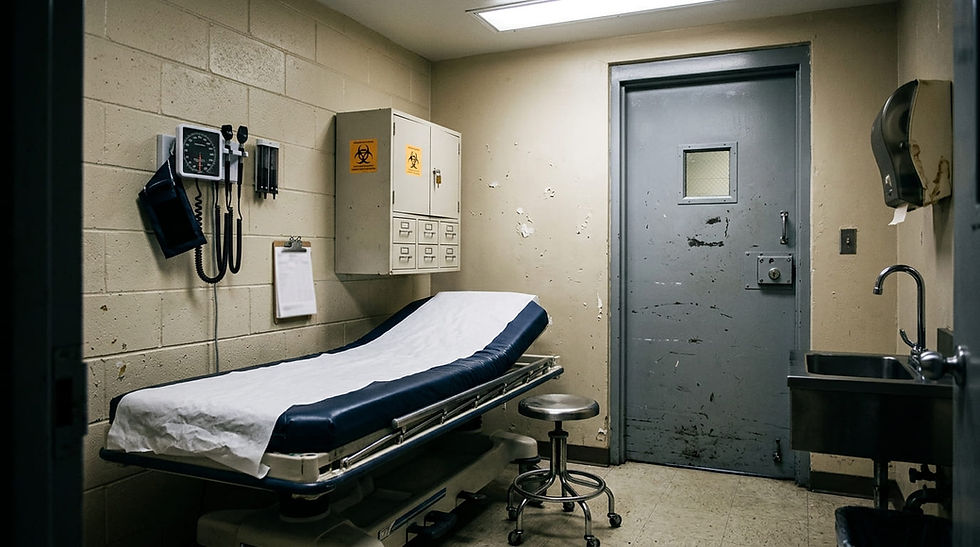
A person spends most of the day locked in a small cell. Meals are delivered through a slot or at the door. Recreation may be limited to a cage, a concrete yard, or a short period alone outside the cell. Conversations are brief. Human contact is controlled. Normal prison routines disappear.
In some cases, solitary confinement is used because someone poses an immediate safety risk. There are situations where prisons need short-term separation to prevent harm. I do not ignore that reality. Correctional facilities can be dangerous places, and officers have to manage real threats.
But the problem begins when solitary becomes routine, prolonged, retaliatory, or poorly monitored.
That is where solitary confinement abuse enters the picture.
When isolation is used too long, too often, or without proper mental health review, it can damage people in ways that are difficult to reverse.
The Psychological Effects of Solitary Confinement
The psychological effects of solitary confinement can begin quickly.
A person placed in isolation loses normal contact with people, movement, noise, routine, and social feedback. The mind is not built to function well under those conditions for long periods. Human beings need interaction. We need sensory input. We need conversation, structure, and some connection to the outside world.
Without those things, people can start to break down.
Common solitary confinement psychological effects can include:
Anxiety
Panic attacks
Depression
Irritability
Anger
Paranoia
Confusion
Difficulty concentrating
Memory problems
Sleep disruption
Hallucinations
Emotional numbness
Self-harm
Suicidal thoughts
I have read accounts where people describe time moving strangely in solitary. Hours feel endless. Days blend together. Small sounds become overwhelming. Silence becomes heavy. Some people start talking to themselves just to hear a human voice. Others withdraw so deeply that normal interaction becomes difficult when they return to the general population.
That is one of the most frightening parts of prolonged solitary confinement. The punishment does not always end when the door opens.
A person can carry the damage with them.
Solitary Confinement and Mental Health Damage
Solitary confinement mental health damage is especially severe for people who already have mental illness.
Prisons hold large numbers of people with depression, trauma histories, bipolar disorder, PTSD, anxiety disorders, substance use disorders, and serious psychiatric conditions. Putting those people in isolation can make existing symptoms worse.
A person who is already hearing voices may hear them more intensely. A person who already struggles with panic may become overwhelmed by the lack of control. A person with depression may sink deeper into hopelessness. Someone with a history of self-harm may become more likely to hurt themselves when left alone for long stretches of time.
This is one reason solitary confinement in prisons remains so controversial.
The stated purpose may be safety or discipline. But if the result is psychological collapse, self-harm, or suicide risk, then the system has to ask a harder question:
Is this actually making anyone safer?
From what I have seen, solitary can create the appearance of control while making the underlying human crisis worse. The person is removed from view. The unit gets quieter. Staff may feel the problem has been contained.
But inside that cell, the person may be unraveling.
That is not rehabilitation. That is not accountability. That is isolation doing damage in silence.
When Solitary Confinement Becomes Abuse
Not every use of segregation is automatically abuse. Short-term separation may sometimes be necessary in a violent or unstable situation.
But solitary confinement becomes abusive when it is used without limits, oversight, medical review, or a clear safety reason.
Prison isolation abuse can happen when:
An inmate is placed in solitary for minor rule violations
Isolation is used as retaliation for complaints or grievances
A person with mental illness is isolated instead of treated
Staff ignore signs of psychological deterioration
Segregation continues for weeks or months without meaningful review
Basic needs, hygiene, medical care, or communication are restricted
Solitary is used to silence, punish, or control rather than protect
The danger is that solitary confinement is easy to hide from the public.
People outside the prison do not see the cell. Families do not see the daily conditions.
Journalists rarely get full access. Even lawyers may struggle to understand what their clients are experiencing day after day.
That secrecy is what allows restrictive housing abuse and prison segregation abuse to continue in some institutions.
When a person is locked away and has limited ability to document what is happening, the system controls the story.
And sometimes the story never gets told.
The Human Cost of Prolonged Solitary Confinement
The human cost of prolonged solitary confinement is not abstract.
It shows up in broken sleep. In shaking hands. In panic. In rage. In blank stares. In men and women who come out of isolation unable to tolerate noise, conversation, or touch. It shows up in families who say their loved one came back different after months in a cell.

One of the most widely known cases is Kalief Browder, a teenager from the Bronx who spent about three years at Rikers Island without being convicted. He spent a significant portion of that time in solitary confinement. After his release, he continued to struggle with the trauma of what he had experienced and died by suicide in 2015.
Another case I have followed closely is Roy Lee Williams in Pennsylvania. Williams spent nearly 26 years in solitary confinement on Pennsylvania’s death row despite a documented history of serious mental illness, and in 2024 the U.S. Court of Appeals for the Third Circuit revived his lawsuit against Pennsylvania prison officials. The court said people with a known history of serious mental illness have a clearly established right not to be held in prolonged, indefinite solitary confinement without a legitimate penological reason. To me, that case shows exactly why prolonged isolation is not just a prison management issue — it can become a constitutional and human crisis.
His case became a national symbol because it forced people to look at what isolation can do to a young person who has not even been convicted of a crime.
But Kalief Browder’s story is not the only one.
Across the US prison system, people have spent long periods in restrictive housing under prison conditions that would test even the strongest mind. Some entered solitary with mental health issues. Some developed symptoms while inside. Some harmed themselves. Some never recovered.
This is the dark side of solitary confinement that rarely appears in official language.
A report may call it administrative segregation.
A prison may call it restrictive housing.
But for the person inside the cell, it can feel like disappearing while still alive.
Why Solitary Confinement Is Still Used in Prisons
If solitary confinement causes so much harm, why is it still used?
The answer is complicated.
Prisons use solitary for discipline, protection, investigations, gang separation, staff safety, and inmate safety. In some situations, administrators argue that they need restrictive housing to prevent violence or manage people who cannot safely remain in general population.
I understand why the issue is not simple. I have spoken with people who know that some prison environments can become dangerous very quickly. Officers have to make decisions under pressure. Facilities need tools to separate people who are threatening others.
But the existence of real security concerns does not justify unlimited isolation.
The problem is not only that solitary exists. The problem is how often it is used, how long it lasts, who gets placed there, and what kind of oversight exists once that door closes.
A humane correctional system should be able to separate someone temporarily without destroying their mental health.
That means strict time limits. Mental health screenings. Regular review. Meaningful human contact. Medical oversight. Documentation. Transparency. And alternatives that do not rely on locking people alone until they break.
The Difference Between Safety and Punishment
There is a line between safety and punishment, and in solitary confinement that line can become dangerously blurry.
If someone has just assaulted another person, short-term separation may be necessary. If someone is at risk of being attacked, protective separation may be needed. If there is an active investigation, temporary housing changes may make sense.
But when isolation becomes the default response to behavior, mental illness, conflict, or staff convenience, the purpose changes.
It becomes less about safety and more about control.
That is where abuse of power in prisons enters the conversation. In any closed institution, staff have enormous authority. They control movement, privileges, reports, discipline, and access. If that authority is misused, solitary confinement can become a weapon.
An inmate who complains can be isolated.
An inmate with mental health problems can be removed from sight.
An inmate who frustrates staff can be punished beyond what is necessary.
That is why oversight matters so much. Without it, prison segregation abuse can hide behind official language.
What Solitary Confinement Does to Families
Families suffer too.
When someone is placed in solitary, communication often becomes harder. Phone calls may be reduced. Visits may be limited. Letters may take longer. Loved ones on the outside may not understand what is happening, why it is happening, or how long it will last.
I have seen families describe the same fear again and again: they know something is wrong, but they cannot see inside.
They hear a change in the person’s voice. They hear panic. They hear anger. They hear hopelessness. Then the call ends, and they are left with nothing but worry.
That is another hidden cost of solitary confinement abuse.
The isolation does not stop at the cell door. It spreads outward. It reaches mothers, fathers, wives, husbands, children, and siblings who are forced to trust a system they cannot see.
Why Accountability Matters
Accountability is the only way to stop solitary confinement from becoming abuse.
That accountability has to be real. Not just a form in a file. Not just a review that repeats whatever staff already wrote. Not just a mental health check where someone stands at the door for two minutes and asks, “Are you okay?”
Real accountability means asking hard questions:
Why was this person placed in solitary?
How long have they been there?
What behavior justifies continued isolation?
Has a qualified mental health professional evaluated them?
Are they deteriorating?
Are there alternatives?
Is this separation protecting people, or is it simply punishing someone out of sight?
Those questions matter because prison systems are public institutions. They operate with public authority. When the state takes away a person’s freedom, it also takes on responsibility for that person’s basic safety and dignity.
That responsibility does not disappear because someone is difficult, angry, mentally ill, or incarcerated.
A Corrections Officer’s Perspective on Isolation
One thing I have learned from reading firsthand correctional officer accounts is that prison culture is not easy to explain from the outside.
Officers work inside an environment most people will never understand. They deal with danger, manipulation, short staffing, violence, and emotional pressure. Many try to do the job professionally under conditions that are far from ideal.
That perspective matters.
But it also makes firsthand honesty even more important.
When former officers speak openly about what happens behind the walls, they help the public understand the difference between necessary security and institutional abuse.
They can explain how policies work on paper and how they sometimes unfold in real life. They can describe the pressure on staff, the silence inside facilities, and the way certain practices become normalized over time.
That is why books like Craig P. Wallin’s Corrections Corrupt matter. A person who spent nearly 20 years inside an adult male correctional institution has a perspective that outside observers simply do not have.
If you want to understand how prison culture can shape both officers and inmates, firsthand accounts are essential.
That is why I come back to firsthand officer accounts whenever I write about isolation, prison culture, and abuse behind the walls. Research can tell us what solitary confinement does to the brain, but an officer who spent years inside the system can explain how these practices become normal, how silence develops, and why the public rarely sees the full picture.
Craig P. Wallin writes from nearly two decades of direct experience inside an adult male correctional institution.
Final Thoughts: The Darkness of Isolation
Solitary confinement is often described in clean institutional language.
Restrictive housing.
Administrative segregation.
Protective custody.
Disciplinary separation.
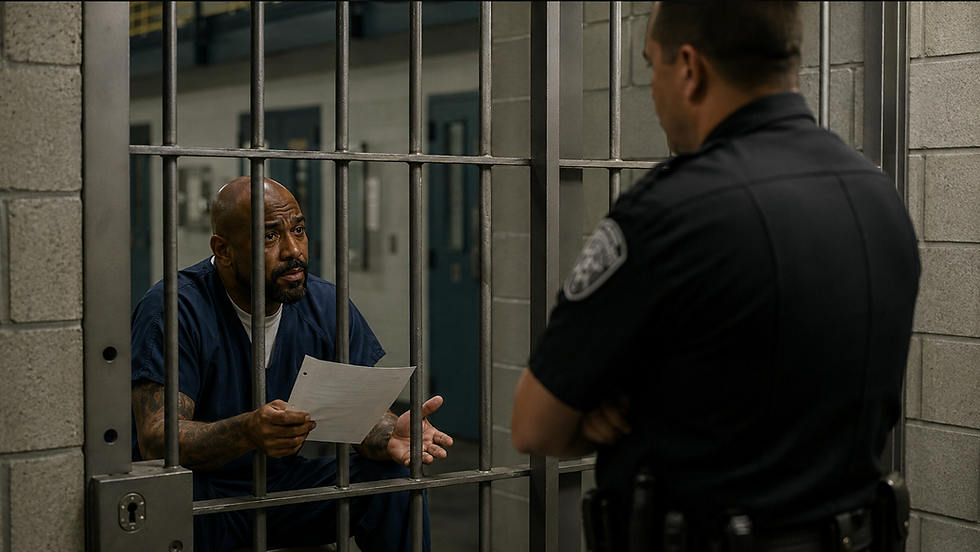
But behind those terms is a human being in a cell, alone for most of the day, trying to keep their mind from turning against them.
The psychological effects of solitary confinement are not minor. They are not imaginary.
They are not just complaints from people who do not like discipline. They are real, documented, and deeply human.
A correctional system has the right to maintain order. It has the responsibility to protect staff and inmates. But it does not have the moral right to use isolation in ways that cause serious psychological damage without oversight, limits, or accountability.
That is the dark side of solitary confinement abuse.
It happens quietly.
It happens behind doors.
And unless people keep asking questions, it stays hidden.
Frequently Asked Questions
What are the psychological effects of solitary confinement?
Common effects include anxiety, depression, paranoia, hallucinations, memory problems, sleep disruption, emotional numbness, self-harm, and suicidal thoughts.
What is solitary confinement abuse?
Solitary confinement becomes abuse when it is used excessively, without oversight, as retaliation, or on people with mental illness without proper medical review.
How long can someone be in solitary confinement?
In some US prisons, people have spent months or even years in solitary confinement. Many reform advocates argue that anything beyond 15 days causes serious psychological harm.
Does solitary confinement affect mental health?
Yes. Research and documented cases show that prolonged isolation can cause or worsen anxiety, depression, paranoia, hallucinations, and suicidal thoughts — especially in people with existing mental health conditions.
Why is solitary confinement still used in prisons?
Prisons use solitary for discipline, safety, gang separation, and investigations. However, critics argue it is overused, poorly monitored, and causes more harm than it prevents.
Read a Firsthand Account From Inside Corrections
If you want to understand the prison system beyond headlines and official statements, I recommend reading firsthand accounts from people who actually worked inside correctional institutions.
Craig P. Wallin spent nearly two decades inside an adult male correctional institution. His memoir, Corrections Corrupt, gives readers a direct look at prison culture, pressure, silence, and the realities that rarely make it into public conversation.
This is the kind of book I would recommend to anyone who wants to understand what life behind the walls can really look like — not from theory, not from politics, but from experience.
About The Author

Craig P. Wallin is a former corrections officer with nearly two decades of experience inside an adult male correctional institution. His memoir, Corrections Corrupt: A True Corrections Officer Story, gives readers a firsthand look at prison life, institutional pressure, misconduct, and the realities that often stay hidden behind the walls.

Comments