Healthcare in Prisons: Medical Neglect Behind Bars and Its Deadly Consequences

Updated: Oct 1
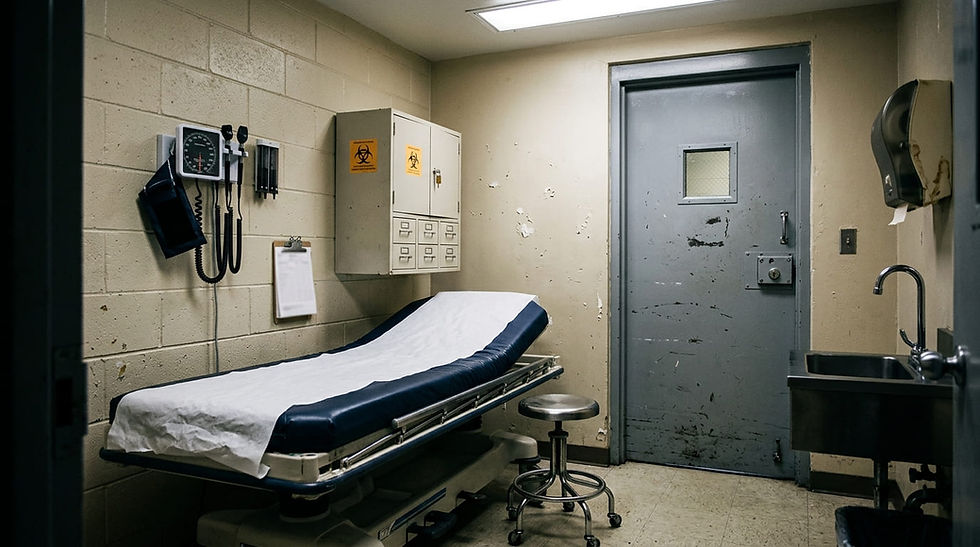
Healthcare in prisons is one of the most consequential — and least examined — issues in the American criminal justice system.
I have spent years reading inspector general reports, federal court records, DOJ investigations, wrongful death lawsuits, and firsthand accounts involving medical care behind bars. The pattern I keep coming back to is uncomfortable: when healthcare in prisons fails, the consequences are not administrative. They are physical. They are permanent. And in some cases, they are fatal.
An incarcerated person cannot simply call another doctor. They cannot walk out of the facility and visit an urgent care clinic. They cannot ask a family member to drive them to an emergency room. They depend on the institution holding them for diagnosis, medication, specialist referrals, emergency treatment, and follow-up care.
That dependence changes everything.
Outside prison, a patient who believes something is wrong can seek a second opinion. Inside prison, the person may have to submit a sick-call request, wait for someone to process it, wait for an appointment, wait for an officer to escort them, and then wait again if the medical provider decides a specialist is necessary.
Every delay adds another point where the system can fail.
The constitutional standard has been established for decades. In Estelle v. Gamble, the Supreme Court held that deliberate indifference to serious medical needs can constitute cruel and unusual punishment under the Eighth Amendment. The Court also made clear that not every medical mistake or disagreement amounts to a constitutional violation. The issue is whether serious medical needs are met with deliberate indifference.
That distinction matters because prison medical neglect is not simply a story about doctors making mistakes. Some failures involve staffing. Some involve communication. Some involve security procedures. Some involve outside specialists and transportation. Others involve people knowing that something is wrong and failing to act.
In facility after facility, inspector general reports and court records have documented the gap between the medical care a correctional institution is supposed to provide and the care people actually receive.
That gap can kill people.
Before I get into the cases, I want to mention a firsthand account that shaped how I think about institutional failure inside correctional facilities. Craig P. Wallin's Corrections Corrupt: A True Corrections Officer Story comes from nearly two decades of experience inside an adult male correctional institution, and that perspective gets at something an inspection report cannot fully capture: how culture, staffing, pressure, and institutional habits affect what happens behind the walls.
A firsthand account from nearly 20 years inside corrections — told without filter.
Quick Answer: Why Is Healthcare in Prisons a Serious Issue?
Healthcare in prisons is a serious issue because incarcerated people do not have independent access to medical care.
That sounds obvious, but it is easy to underestimate what it means in practice.
Outside prison, a person with persistent abdominal pain can make an appointment with a specialist. Someone whose medication is not working can call a doctor. A patient with worsening symptoms can go to an emergency department without first obtaining permission from a correctional institution.
Inside a correctional facility, every one of those steps can depend on the institution.
A medical request has to be received. Someone has to review it. The person has to be scheduled. Security staff have to make the movement possible. A provider has to evaluate the patient. If testing is ordered, that testing has to happen. If the result is serious, somebody has to recognize it and act on it.
When any link breaks, the patient is left waiting.
Prison medical neglect becomes legally significant when it reaches the level of deliberate indifference — when responsible officials know about a serious medical need and fail to respond appropriately. That standard comes directly from Estelle v. Gamble, which remains a foundation for constitutional claims involving inadequate medical care in correctional facilities.
The problem is not confined to one state or one type of institution. Federal prisons, state prisons, county jails, and facilities using private medical contractors have all faced allegations and documented findings involving delayed treatment, staffing shortages, inadequate monitoring, and failures to respond to serious medical conditions.
What I have learned from following these cases is that the most revealing evidence often appears in the timeline.
A person reported a symptom.
A request was submitted.
Nothing happened.
The symptom became worse.
Another request was made.
A test was eventually ordered.
The appointment was delayed.
By the time somebody acted, the medical situation had changed completely.
That timeline is where many prison medical neglect cases become difficult to dismiss as simple mistakes.
What Medical Neglect in Prisons Looks Like
Delayed diagnosis and treatment
The pattern I encounter most often in documented prison medical neglect cases is delay.
A symptom appears. A request is submitted. Days pass. The symptom worsens.
Another request goes in. More time passes. Eventually a diagnosis is made, but by then the condition may have progressed beyond the point where early treatment could have made a meaningful difference.
Cancer is one of the clearest examples.
Jeffrey Ramirez was incarcerated in the federal system when he discovered a lump on his testicle. NPR reported that he waited more than a year for an ultrasound after first raising concerns. By the time he was diagnosed, he had advanced testicular cancer and was eventually released from federal custody so he could spend his remaining time with his family. He died in January 2023 at age 41.
I keep coming back to Ramirez's case because the medical issue was not invisible. He knew something was wrong. He asked for care. The question became how long the system would take to respond.
That is where delayed diagnosis becomes more than a scheduling problem.
Cancer, cardiac disease, diabetes, infection, and other serious conditions can become dramatically harder to treat when diagnosis is postponed. A delay that looks small on a spreadsheet can represent weeks or months in the life of a patient whose condition is changing every day.
Ignored symptoms and medical complaints
Even more troubling than delayed diagnosis is the documented pattern of ignored complaints.
Zachary Marshall, a 35-year-old detainee at Richland County Jail in Ohio, died of sepsis in December 2021. A federal lawsuit filed in 2023 alleged that medical staff repeatedly failed to respond appropriately to his complaints and worsening symptoms. The jail later ended its relationship with Advanced Correctional Healthcare, while claims connected to Marshall's death were resolved in 2024.
I have followed enough medical-neglect cases to know that the words "complained of symptoms" can hide an enormous amount of detail.
What symptoms?
How many times did the person report them?
Who received the complaint?
Was the person examined?
Were vital signs taken?
Was the complaint documented?
Was a physician notified?
Was the person sent to a hospital?
Those questions matter because medical care inside a correctional facility depends heavily on documentation and communication.
When a serious complaint disappears into a system, the person making the complaint has very little ability to compensate for that failure.
Ignored complaints represent a failure at the most basic level: listening to the person who is telling you something is wrong.
Lack of specialist care
Prison healthcare systems also face a recurring problem with specialist access.
An incarcerated person may need a cardiologist, oncologist, neurologist, gastroenterologist, orthopedic surgeon, or another specialist whose expertise is not available inside the facility.
That referral creates another chain of dependencies.
Someone has to make the referral. Someone has to authorize it. An appointment has to be scheduled. Transportation has to be arranged. Correctional officers have to be available for the escort. The outside provider has to send records back. The prison medical team has to review those records and act on the recommendations.
I have seen how easily a medical referral can become a paperwork problem rather than a medical priority.
The DOJ Inspector General's inspection of Federal Detention Center SeaTac provides a stark example. The OIG found significant healthcare staffing shortages, including a Health Services Department staffed at only 50 percent during the December 2024 inspection. The report also identified delays in routine and serious medical care, a large laboratory backlog, and problems with preventive screening.
At SeaTac, the OIG found that 82 percent of average-risk inmates in the reviewed age range had not been offered annual colorectal cancer screening during the preceding year. These are not exotic procedures. They are routine preventive measures designed to catch disease before it becomes harder to treat.
Medication delays or interruptions
Medication problems are another area where prison medical care can fail without anyone initially seeing an obvious crisis.
A prescription can be changed. A medication can be delayed. A dosage can be reduced. A pharmacy order can fail to reach the patient. A medication that was available in the community may be unavailable inside the facility.
In 2024, Nick Bovis, who was serving a federal sentence at FCI Florence in Colorado, entered custody with a prescription for hydrochlorothiazide for longstanding high blood pressure. Court filings stated that the Bureau of Prisons reduced the medication to one-quarter of the prescribed dosage. His blood pressure later became extremely high, and after medication changes he experienced serious symptoms and a transient ischemic attack. A federal judge ordered him released to home confinement in March 2025 after finding that his medical treatment in prison had become inadequate.
What stands out to me about cases like this is how ordinary the starting point can be.
This was not an obscure medication. It was a documented prescription for a chronic condition. The failure was not necessarily some rare medical mystery. It involved continuity of care — making sure the treatment a patient needs actually follows that patient into custody.
When medication is interrupted, the consequences can develop quickly.
For someone with diabetes, blood pressure problems, epilepsy, heart disease, or a serious psychiatric condition, medication is not a convenience. It can be the difference between stability and a medical emergency.
Why Prison Healthcare Can Fail
Understaffing and limited resources
The most consistent finding I see across inspector general reports is understaffing.
The DOJ OIG's inspection of Federal Medical Center Devens in Massachusetts is a good example. During the April 2024 inspection, Health Services was staffed at about 76 percent. Two physicians were on extended leave, three physician positions were vacant, and after the Clinical Director retired in June 2024, the facility was left with only one physician providing daily patient care. The OIG also identified vacancies across pharmacy, nursing, dental, and psychology services.
FMC Devens is not an ordinary prison. It is a federal medical center designed to care for people with serious medical and mental health needs.
That makes the staffing findings especially significant.
The OIG found that 57 outside medical appointments had not yet been scheduled and were, on average, 53 days overdue at the time of inspection. The report also found inconsistent access to medical care, gaps in preventive screening, and failures to test some diabetic inmates within required timeframes.
This is where I think the conversation about prison healthcare has to move beyond blaming one person.
Individual misconduct matters. Individual negligence matters. But a system that repeatedly operates without enough doctors, nurses, psychologists, and support staff creates conditions where delays become normal.
The OIG has repeatedly identified staffing as a BOP-wide concern. Its 2024 compendium described staffing problems as pervasive and long-standing across the federal prison system.
If there are not enough people to see patients, review records, schedule outside appointments, follow up on test results, and manage chronic conditions, the system is operating beyond its capacity.
That is a structural problem.
Security priorities versus medical needs
There is another issue that outsiders often miss: medical care inside prison is inseparable from security operations.
A doctor may decide that a patient needs to see a specialist. That does not mean the patient automatically arrives at the specialist's office.
Someone has to escort them.
Transportation may be required.
A correctional post may need coverage.
The movement may have to be coordinated around lockdowns, staffing levels, institutional schedules, or security concerns.
I have read enough inspection reports to know how often this tension appears in the background of medical delays.
The medical department may want a patient moved.
The security department may not have enough staff to move them.
The appointment gets postponed.
The patient waits.
The underlying medical problem does not wait.
That is one reason inadequate medical care in prisons cannot always be understood by looking only at the medical department. Healthcare operates inside a correctional system, and every medical decision has to pass through that system's operational machinery.
Poor communication and documentation
Prison medical systems depend heavily on records.
A treatment plan is useless if it does not follow the patient after a transfer. A specialist's recommendation does little good if nobody reviews it. A medication change becomes dangerous if the nursing staff administering medications do not receive the information.
The OIG's FDC SeaTac inspection found that a backlog of laboratory orders affected the facility's ability to monitor inmates with chronic conditions. The report also identified broader problems involving healthcare staffing and medication management.
I have always paid close attention to documentation in these cases because records often tell the story in a way that interviews cannot.
A person may say, "I told them."
The institution may say, "We don't have a record of that."
Then investigators find a request form.
Or a medical note.
Or a video recording.
Or a prescription.
Or an email showing that somebody knew about the problem.
That is why documentation is not clerical housekeeping in a prison medical system. It is part of patient safety.
Weak accountability
When prison medical neglect causes serious harm, accountability can be slow.
Sometimes a lawsuit takes years.
Sometimes an inspector general report comes long after the person has died.
Sometimes a settlement resolves the case without establishing every disputed fact publicly.
And sometimes criminal prosecution occurs only after a federal investigation uncovers conduct that the institution itself failed to address.
The case of W.W. at Federal Correctional Institution Petersburg in Virginia is one of the clearest recent examples I have followed.
In January 2021, W.W., a 47-year-old federal inmate, displayed severe neurological symptoms, including sudden incontinence, difficulty speaking and walking, and repeated falls. In 2024, former BOP lieutenant Shronda Covington and nurse Tonya Farley were convicted after evidence showed failures to obtain necessary medical care and false statements to federal investigators; former lieutenant Michael Anderson had previously pleaded guilty in connection with W.W.'s death. Covington was sentenced in May 2025 to 12 months in prison, while Farley received six months.
That case stays with me because it shows what accountability looks like when the evidence finally reaches federal investigators.
The problem is that accountability arrived after a man died.
A system that only works after tragedy is not functioning as well as it should.
Inadequate Medical Care in Prisons and Its Consequences
Chronic illness
Inadequate medical care in prisons can turn manageable chronic conditions into serious crises.
Diabetes requires consistent monitoring, medication, and dietary management.
Hypertension requires medication and follow-up. Epilepsy requires reliable access to prescribed treatment. Kidney disease, HIV, heart disease, and many other conditions require ongoing care rather than occasional attention.
I have seen a recurring mistake in the public discussion: people assume that because a condition is "chronic," it is somehow less urgent.
The opposite can be true.
Chronic conditions are dangerous precisely because they require consistency.
A person with controlled diabetes may remain stable for years when medication, diet, and monitoring are consistent. Interrupt that system and the same person can become seriously ill.
Mental and physical deterioration
People do not leave their medical histories at the prison gate.
They arrive with diabetes, cancer, depression, hypertension, schizophrenia, heart disease, injuries, disabilities, and other conditions.
Without consistent mental health care, psychiatric conditions can worsen. Without consistent physical care, treatable conditions can become permanent disabilities.
The harm may be dramatic, or it may accumulate quietly.
An infection that could have been treated with antibiotics can become a major medical emergency. A missed cancer screening can delay diagnosis. A medication interruption can destabilize a condition that had previously been under control.
I have always been struck by how little of this damage appears in a simple prison statistic.
A report may record that someone was eventually treated.
It may not show how much pain they endured before treatment.
It may not show the family members who watched the person's health deteriorate.
It may not show the job that person lost after release because of a permanent disability.
Medical neglect can create consequences that continue long after the cell door opens.
Preventable emergencies
Some cases involve emergencies that should have been recognized long before the final crisis.
Louis Jung Jr., a 50-year-old man with Type 1 diabetes, died of diabetic ketoacidosis at Philadelphia's Curran-Fromhold Correctional Facility in November 2023. In March 2026, a federal jury found the city and a prison lieutenant liable for violating his constitutional right to necessary medical care and awarded his sons $1.67 million, including punitive damages.
I followed that case because it illustrates the difference between a sudden medical catastrophe and a preventable emergency. Jung's diabetes was known, yet the care he received during his final period in custody failed to prevent the condition from progressing to a fatal crisis. The jury's verdict found constitutional liability rather than treating the death as an unavoidable medical event.
Another case that belongs in this discussion is W.W. at FCI Petersburg. DOJ records show that his condition deteriorated over roughly two days, with repeated calls for assistance and repeated signs of a serious neurological problem, before he suffered fatal injuries and received inadequate medical attention. The later federal convictions of BOP personnel show that this was not merely a dispute over medical judgment; the conduct resulted in criminal civil-rights convictions.
These cases are difficult to read, but they are exactly why I think prison healthcare deserves sustained scrutiny.
Long-term harm
The consequences of prison medical neglect frequently extend beyond incarceration.
Jeffrey Ramirez left federal custody with advanced cancer and spent his final months with his family. Frederick Bardell, another federal prisoner, died nine days after his release from FCI Seagoville in 2021. A DOJ OIG investigation released in January 2026 found serious problems surrounding his medical care, including long delays in obtaining a colonoscopy after he reported blood in his stool and after testing indicated a serious cancer risk.
The Bardell investigation is particularly significant because it examined more than one missed appointment. The OIG identified problems involving staffing, medical scheduling, follow-up procedures, compassionate-release review, and the government's representations to the court. The report produced eight recommendations for the BOP.
That is the broader cost of inadequate medical care in prisons.
The person may eventually leave custody, but the damage can leave with them.
Prisoners' Rights to Medical Care
Prisoners' rights to medical care are grounded in the Eighth Amendment.
In Estelle v. Gamble (1976), the Supreme Court held that deliberate indifference to serious medical needs can constitute cruel and unusual punishment under the Eighth Amendment. The ruling established a constitutional standard that has shaped decades of litigation over inadequate treatment in correctional facilities.
But the legal standard is more precise than simply saying that prisoners have a right to perfect medical care.
They do not.
Doctors can make mistakes. Medical professionals can disagree. Not every delayed appointment is automatically a constitutional violation. The question in an Eighth Amendment case is whether officials were deliberately indifferent to a serious medical need.
That distinction matters because serious prison medical neglect should not be weakened by overstating weaker cases.
At the same time, the constitutional standard cannot mean much if institutions cannot provide basic care in practice.
The right to medical care includes meaningful access to necessary treatment. It includes access to prescribed medication. It includes evaluation of serious symptoms.
It includes appropriate follow-up when tests reveal dangerous conditions.
The inmate rights connected to medical care also include protection from retaliation when incarcerated people complain about inadequate treatment.
I have seen how these rights can exist on paper while becoming difficult to exercise in practice.
A person who believes their medical complaint is being ignored may have to use the same institutional system that controls their housing, movement, communication, and daily life.
That is why the gap between legal rights and actual access to care matters so much.
Prison medical neglect is not simply a healthcare problem. In serious cases, it becomes a constitutional accountability problem.
When Prison Medical Neglect Becomes Abuse

Prison medical neglect becomes abuse when it crosses from system failure into deliberate indifference.
The legal standard matters here, but so does the human one.
When a detainee repeatedly reports symptoms of a potentially life-threatening condition and responsible staff fail to respond, that deserves scrutiny. When a diabetic patient's condition is known and monitoring or medication is repeatedly inadequate, investigators need to ask why. When a cancer diagnosis is delayed after repeated symptoms and requests for care, the timeline matters.
I do not believe every medical error should be called abuse.
That would be inaccurate and would undermine legitimate cases.
But I also do not believe institutional labels should make serious failures sound harmless.
A missed appointment can be a scheduling problem.
A pattern of missed appointments involving the same seriously ill patient is something else.
A medication error can happen.
A documented decision to ignore a serious medical need is something else.
A staffing shortage can be difficult to solve.
Leaving a medical facility chronically understaffed while serious patients wait months for treatment raises a different question — one about institutional responsibility.
The priso n conditions that allow medical neglect to persist can overlap with the same weak oversight that allows correctional officer misconduct and prison corruption to survive: poor documentation, weak supervision, institutional defensiveness, and accountability systems that often arrive after the damage has already occurred.
That is the part of this subject I find hardest to ignore.
Medical care does not operate separately from prison culture.
The culture affects whether complaints are taken seriously.
It affects whether staff communicate.
It affects whether supervisors ask difficult questions.
And it affects whether people inside the institution believe that failures will actually have consequences.
Craig P. Wallin writes from nearly two decades of direct experience inside an adult male correctional institution.
How Oversight Failures Allow Medical Neglect to Continue
The DOJ OIG has documented healthcare problems across the federal prison system for years: staffing shortages, delayed care, weak follow-up, inadequate screening, incomplete records, and problems managing outside medical services.
The pattern is difficult to dismiss when the same categories of problems keep appearing in different institutions.
In its 2024 review of BOP oversight products, the OIG described staffing problems as pervasive and long-standing. Its later facility inspections continued to document healthcare staffing shortages and their effect on medical services.
The 2025 OIG evaluation of colorectal cancer screening provides another example.
Among 37,942 average-risk federal inmates ages 45 through 74 in the reviewed population, fewer than two-thirds were offered a colorectal cancer screening during the relevant period, and only about 47 percent completed an annual screening.
Among a sample of inmates with positive screening results, 14 percent had no documented follow-up or insufficient documentation, and the sampled inmates waited an average of eight months for a colonoscopy after a positive screening result.
I do not read numbers like those as proof that every medical professional inside the federal system is failing.
Many healthcare workers inside corrections are trying to provide care under difficult conditions.
What the numbers tell me is that the system has recurring capacity and oversight problems that individual professionalism cannot always overcome.
The Frederick Bardell case makes that point even more sharply.
Bardell reported blood in his stool in July 2020. The OIG later found that he did not complete a successful colonoscopy for more than six months, despite later evidence pointing toward advanced colorectal cancer. He was ultimately released from federal custody and died nine days later.
The OIG's recommendations following the investigation included creating clearer procedures for scheduling medical appointments, tracking urgent medical needs, and ensuring regular follow-up for inmates who report serious symptoms or receive critical test results.
That tells me something important about oversight.
A report can identify the problem.
A recommendation can describe the solution.
But the real test is whether the correctional system changes its behavior afterward.
If the same failure returns, another person pays the price.
A Corrections Officer's Perspective on Prison Healthcare
Most public discussion of healthcare in prisons focuses on the medical side — doctors, nurses, medications, staffing levels, referrals, and treatment decisions.
Less attention goes to how the correctional environment controls access to all of those things.
In a correctional facility, getting from a housing unit to a medical clinic requires institutional cooperation at multiple levels.
An incarcerated person has to request care.
Someone has to receive that request.
Medical staff have to evaluate it.
An officer may have to escort the person.
A security post has to remain covered.
The appointment has to happen.
If outside treatment is necessary, transportation has to be arranged.
The medical records have to come back.
Then someone has to review them.
That is a long chain.
I have followed enough cases to know that a failure at any point can become a medical failure by the end of the process.
This is the invisible layer of healthcare in prisons that rarely makes it into public discussions. A medical provider may genuinely want to see a patient, but the provider may not control transportation. A correctional officer may want to escort the patient, but the institution may not have enough staff to leave another post uncovered.
That does not excuse neglect.
It explains why accountability has to look at the whole system.
The DOJ OIG's FMC Devens inspection demonstrated exactly this interaction. The facility had significant healthcare vacancies, a large number of overdue outside appointments, and shortages that affected its ability to escort inmates while maintaining required security coverage.
I have also learned that institutional culture matters.
A facility with strong leadership, clear medical referral procedures, good communication, and staff who take medical complaints seriously can operate very differently from one where requests are routinely deprioritized and employees are stretched beyond capacity.
That difference can determine whether a person receives treatment in time.
And this is where the insider perspective matters.
A report can tell me that staffing was 76 percent.
A court record can tell me that an appointment was delayed.
But someone who spent years inside the facility can explain how those shortages affected the ordinary rhythm of a shift — how decisions were made, what pressures officers faced, which procedures were routinely followed, and where the written policy differed from daily practice.
That perspective does not excuse misconduct.
It helps explain how institutional habits become normal.
Read a Firsthand Corrections Officer Story
I have followed prison healthcare cases for years.
I have read OIG reports, federal court records, wrongful death verdicts, civil-rights prosecutions, medical investigations, and testimony about what adequate prison care should look like.
Those documents can establish what happened.
They can establish timelines.
They can establish who knew what and when.
But they do not always capture what it feels like to work inside the institution where those decisions are made.
That is why I recommend Corrections Corrupt: A True Corrections Officer Story by Craig P. Wallin.
Craig spent nearly 20 years working inside an adult male correctional institution. His perspective gives readers something that a government report cannot provide: the day-to-day view of correctional culture, pressure, responsibility, and the gap that can develop between written policy and what actually happens on a prison floor.
For anyone trying to understand healthcare in prisons, that perspective matters.
Medical care does not happen in a vacuum.
It happens in housing units.
It happens during shifts.
It happens when an officer receives a medical complaint.
It happens when a nurse is trying to manage a workload.
It happens when a supervisor has to make a decision.
It happens when a patient needs to be moved across a facility.
And it happens inside a culture that can either encourage accountability or discourage people from asking difficult questions.
What I find valuable about Wallin's account is that it gives readers a way to look at those institutional pressures from the inside rather than treating corrections as an abstract government system.
That does not mean accepting every practice inside corrections.
It means understanding how the environment works.
And understanding that environment is essential if we want to understand why medical neglect, staff misconduct, and other institutional failures can continue even when policies appear strong on paper.
I would not tell a reader to wait until another wrongful death verdict or another inspector general report makes the news.
Read the firsthand account now, while these cases are still in front of us.
The federal oversight reports are already documenting staffing shortages. The court cases are already documenting delayed treatment. The OIG investigations are already identifying recurring failures. And families are still living with the consequences.
If you want to understand the human side of the institution behind those reports, this is the book I would put in your hands.
Experience nearly 20 years of corrections work — told honestly, without filter.
Frequently Asked Questions
What is medical neglect in prison?
Medical neglect in prison occurs when incarcerated people with serious medical needs do not receive timely, adequate diagnosis, treatment, medication, or specialist care. It can range from ignored complaints and delayed diagnoses to medication interruptions and failure to provide preventive screenings. When medical neglect reaches the level of deliberate indifference to a serious medical need, it can constitute a constitutional violation under the Eighth Amendment.
Do prisoners have a right to medical care?
Yes. The Supreme Court established in Estelle v. Gamble (1976) that deliberate indifference to a prisoner's serious medical needs constitutes cruel and unusual punishment in violation of the Eighth Amendment. Incarcerated people have a constitutional right to have serious medical conditions evaluated and treated — not simply to have a medical clinic available on the premises.
What are examples of inadequate medical care in prisons?
Examples include delayed diagnosis of cancer, sepsis, or other serious conditions; failure to monitor chronic illnesses such as diabetes; medication interruptions; canceled or unscheduled specialist referrals; ignored medical complaints; missing medical records; and failure to provide standard preventive care such as cancer screenings. All of these patterns have been documented in federal inspector general reports and wrongful death litigation.
Why does prison healthcare fail?
Prison healthcare can fail for several reasons: chronic understaffing of medical positions, tension between security priorities and medical access, poor documentation and communication between medical and correctional staff, inadequate accountability when care is delayed or denied, and reliance on private contractors whose financial incentives may not align with patient outcomes.
When can prison medical neglect become abuse?
Prison medical neglect crosses into abuse — and potential constitutional violation — when staff or administrators are aware of a serious medical need and deliberately fail to address it. This is the deliberate indifference standard. It differs from medical disagreement or negligence; it requires that the responsible party knew of the need and chose not to respond adequately.
About The Author

Craig P. Wallin is a former corrections officer with nearly two decades of experience inside an adult male correctional institution. His memoir, Corrections Corrupt: A True Corrections Officer Story, gives readers a firsthand look at prison life, institutional pressure, misconduct, and the realities that often stay hidden behind the walls.

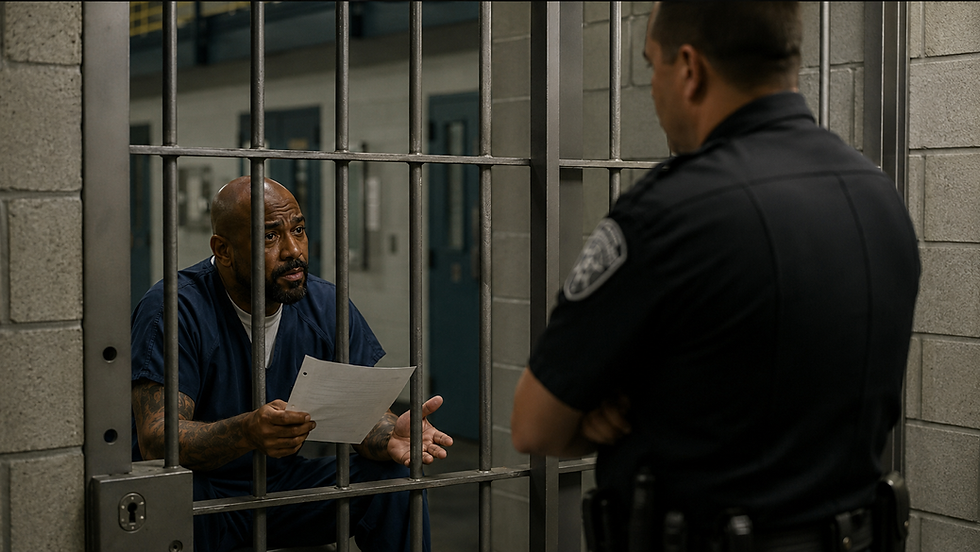

Comments